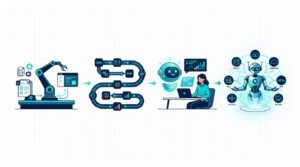


Losing good employees is expensive. Replacing one mid-level professional can cost anywhere from 50% to 200% of their annual salary once you factor in recruiting, onboarding, lost productivity, and the institutional knowledge that walks out the door with them. In competitive talent markets, that adds up fast – and the problem is getting harder to solve with traditional HR tools.
Most HR teams are still working with the wrong kind of data. Exit interviews, annual engagement surveys, and turnover dashboards all describe what has already happened. They measure loss after the fact. What organisations actually need is a way to see attrition coming before it happens – and that is exactly what predictive analytics in HR delivers.
AI-driven HR analytics changes the fundamental question HR asks. Instead of “why did this person leave?”, the question becomes “who is most likely to leave in the next 90 days, and what can we do about it?” That shift – from explanation to anticipation – is what separates reactive workforce management from a genuinely strategic approach to employee retention.
Research from McKinsey & Company consistently finds that organisations investing in people analytics outperform peers on both retention and productivity. The competitive advantage is not having more data – most large organisations are already data-rich. The advantage comes from turning that data into timely, targeted decisions that keep the right people in the right roles.
What Predictive Analytics Means in an HR Context
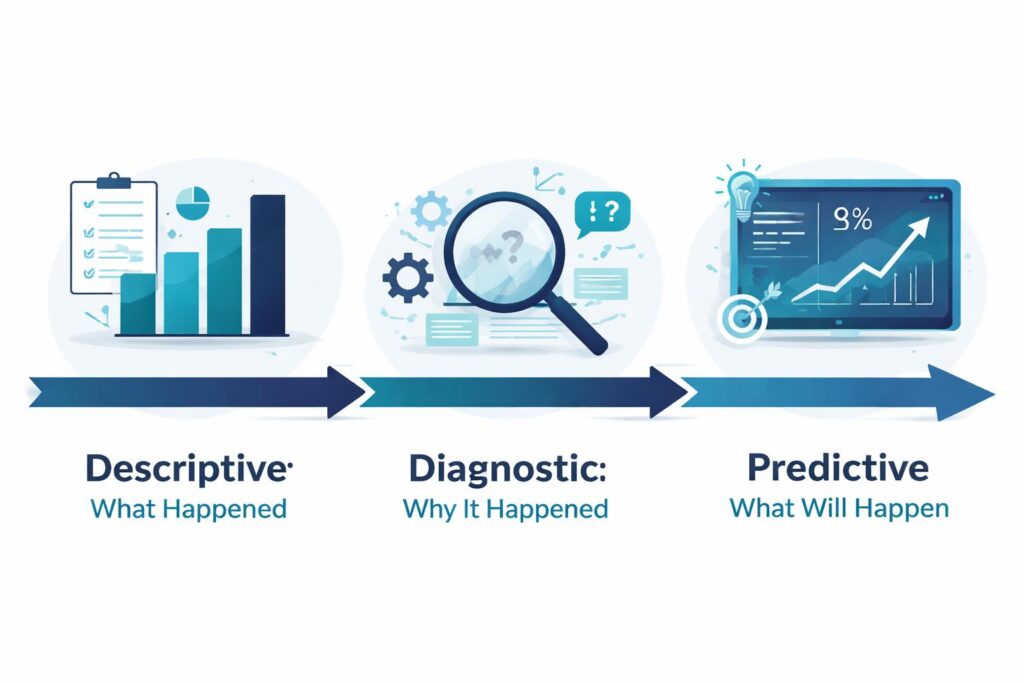
Predictive analytics is not a single tool or software product. It is an approach to workforce management that uses historical data, machine learning models, and behavioural signals to forecast what is likely to happen – and give managers enough lead time to act on that forecast.
To understand where predictive analytics fits in the HR toolkit, it helps to see how it differs from what most organisations are already doing.
From Descriptive Metrics to Predictive Workforce Insights
Most HR reporting today is descriptive. It tells you what happened last quarter: how many people left, which teams had the most absences, what the average tenure was for employees who resigned. That information has value, but it does not help you prevent the next departure.
Predictive analytics works differently. It looks at patterns in historical data – engagement trends, performance trajectories, compensation gaps, workload changes – and uses those patterns to estimate the probability that a specific employee will leave within a defined time window. The output is not a report about the past. It is a forward-looking risk score that gives HR and managers time to act.
The shift from descriptive to predictive is not just technical. It requires HR teams to move from reporting functions to advisory roles that are embedded in day-to-day management decisions. That cultural shift is often harder than the technology implementation itself.
Key Data Signals Used in Retention Models
No single data point reliably predicts whether someone will leave. Attrition prediction works by combining multiple weak signals into a composite risk score. The most valuable input categories include:
- Engagement and sentiment data – pulse survey scores, response rate trends, and sentiment analysis from open-ended feedback. Declining engagement typically precedes attrition by several months, making it one of the earliest available warning signals.
- Performance trajectory – not just a current rating, but whether performance is improving, plateauing, or declining over time. Both high performers who feel unrecognised and low performers under corrective action show elevated flight risk, for different reasons.
- Compensation competitiveness – internal pay equity data combined with external market benchmarking. Employees who perceive themselves as underpaid relative to peers or market rates are significantly more likely to start looking elsewhere.
- Workload and utilisation patterns – data from project management tools, calendar activity, or time-tracking platforms that reveal sustained overload or, equally important, underutilisation.
- Career progression signals – time-in-role, promotion history, training participation, and lateral movement data that indicate whether an employee is developing or stagnating.
The predictive power comes from the combination. An employee who is slightly underpaid, overworked, and has not received a promotion in three years is at substantially higher risk than any one of those factors would suggest in isolation.
How AI Models Predict Employee Attrition
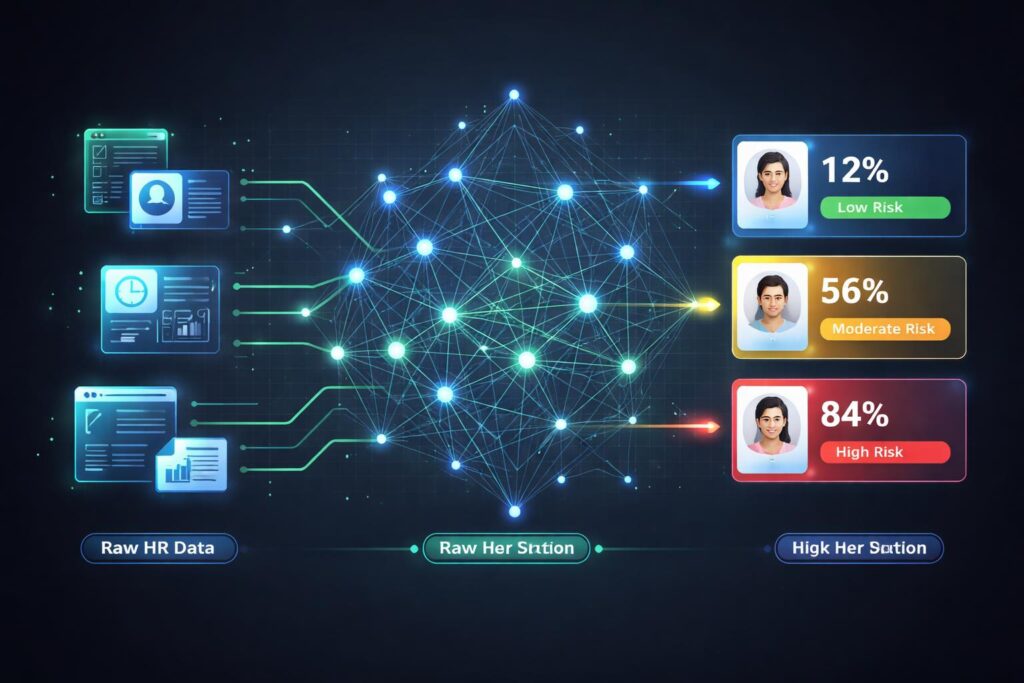
Predicting attrition is, at its core, a classification problem: for each employee, the model estimates the probability of departure within a defined time horizon – typically 30, 60, or 90 days. Several machine learning approaches have demonstrated consistent performance in this domain.
Understanding which techniques work and why matters, because the choice of model affects not just accuracy but interpretability – and interpretability is essential in HR contexts where outputs must be explainable to managers and defensible to employees.
Machine Learning Techniques for Attrition Prediction
The table below summarises the main approaches used in HR attrition modelling, along with their practical strengths and limitations.
| Technique | How It Works | Best Used For | Limitation |
|---|---|---|---|
| Gradient Boosted Trees (XGBoost, LightGBM) | Combines many decision trees to model complex, non-linear patterns | High-accuracy attrition scoring across large workforces | Requires more data and tuning than simpler models |
| Logistic Regression | Estimates probability of departure based on weighted input variables | Baseline models; highly interpretable outputs | Less effective at capturing complex interaction effects |
| Survival Analysis | Estimates not just if an employee will leave, but when | Time-to-departure forecasting; long-tenure workforce planning | More complex to implement and explain |
| Anomaly Detection | Flags sudden deviations from an employee’s historical behaviour baseline | Early warning on behavioural change events | Can generate false positives if baseline data is noisy |
In practice, most enterprise deployments combine approaches – using gradient boosted models for prediction accuracy and logistic regression or SHAP explainability frameworks to communicate the drivers of individual risk scores to non-technical stakeholders.
Feature Engineering and Data Quality in HR Analytics
Model performance is bounded by data quality. In most HR environments, data quality challenges are widespread: HR systems often contain incomplete records, inconsistent field definitions across business units, manual entry errors, and significant gaps in historical coverage. Before any model can be trained reliably, a substantial data engineering investment is required.
Feature engineering is the process of transforming raw data into variables that actually carry predictive signal. A raw salary figure is less predictive than a derived variable representing where that salary sits within the peer group percentile. A tenure value is less informative than “months since last promotion.” These transformations require domain knowledge from HR practitioners working alongside data scientists – neither group alone has everything they need.
Temporal features are especially important. Many signals are only meaningful in terms of their direction and rate of change. An engagement score of 6 out of 10 is very different depending on whether it has risen from 4 or fallen from 9. Models that capture trend dynamics consistently outperform those built on point-in-time snapshots.
Explainability and Trust in AI-Driven HR Decisions
A model that managers do not trust will not get used, no matter how accurate it is. Explainability is not an optional feature in HR analytics – it is a prerequisite for adoption.
Frameworks such as SHAP (SHapley Additive exPlanations) allow data science teams to decompose an individual risk score into its contributing factors. Instead of telling a manager “this employee has a 74% attrition probability,” the system can show that the score is being driven primarily by declining engagement over the past two quarters and a compensation gap of 12% below peer median – factors the manager can recognise, discuss, and act on. That specificity turns an algorithmic output into a useful conversation starter.
Organisations that invest in explainable AI for HR consistently report higher manager adoption rates and more consistent use of model outputs. When managers understand why a risk flag was generated and can connect it to their own observations, trust builds over time.
Using Predictive Analytics to Improve Employee Retention

Generating a risk score is only the beginning. The value of predictive HR analytics is realised through what happens next – whether the insight translates into a meaningful conversation, a targeted intervention, or a policy change that addresses a systemic risk driver.
Organisations that close the loop between prediction and action are the ones that see measurable retention improvements. Those that treat analytics as a reporting exercise, rather than a decision-support tool, rarely move the numbers.
Early Risk Detection and Proactive Interventions
When a model identifies an employee in the top quintile of attrition risk, it creates a window of opportunity – typically 60 to 90 days – that would not otherwise exist. That window is enough time for a genuine career conversation, a compensation review, a project reassignment, or a targeted development investment. The key is that the intervention happens before the employee has started actively job searching, when the organisation still has real leverage.
The nature of the intervention should follow the risk drivers the model identifies. An employee flagged primarily due to workload stress needs a different response than one flagged due to career stagnation. Routing the right type of intervention to the right situation is where the intelligence of the system compounds. Generic retention tactics applied uniformly across the workforce are both costly and largely ineffective.
Personalised Retention Strategies
Predictive analytics makes it practical to design retention strategies calibrated to individual employee profiles rather than applying the same programme to everyone. A high-potential employee with strong performance but declining engagement might respond best to accelerated development and higher organisational visibility. A tenured specialist who has plateaued in formal progression may value a lateral enrichment role, a mentoring assignment, or technical leadership recognition.
This kind of personalisation is impossible without data, especially for managers overseeing large, distributed, or hybrid teams who cannot rely on close daily observation. Predictive analytics closes the information gap, giving people managers the contextual insight they need to act effectively as coaches – even at scale.
Workforce Planning and Managerial Decision Support
Predictive analytics is not just a reactive tool. Identifying clusters of high-risk roles, teams, or business units enables proactive workforce planning – targeted investment in employer value proposition, accelerated talent pipeline development, or succession readiness work before critical positions become vacant rather than after.
When retention risk signals are embedded directly in the platforms managers use daily – HRIS dashboards, manager portals, or integrated talent suites – the likelihood of timely action increases substantially. The goal is to make predictive insight part of the normal management workflow, not a separate HR report that competes for attention.
Architecture for Predictive HR Analytics Platforms
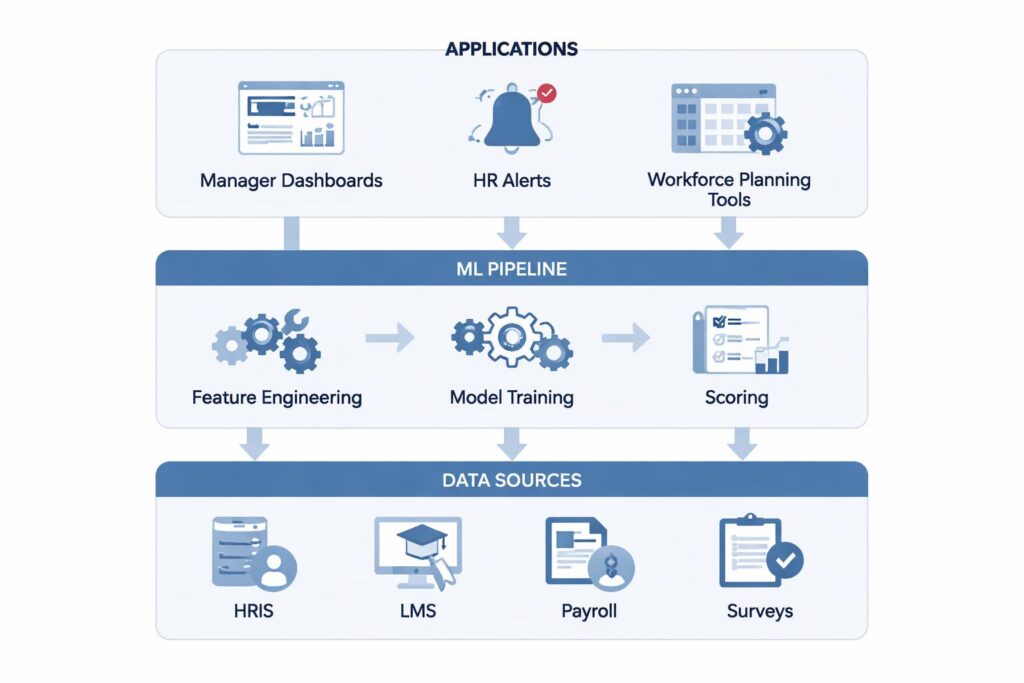
Building a reliable predictive analytics capability requires more than a machine learning model. It requires a data infrastructure that can collect, integrate, and govern workforce data at scale, a cloud environment capable of running continuous ML pipelines, and operational practices that keep models accurate as the organisation evolves.
Getting the architecture right from the start reduces the risk of model degradation, compliance exposure, and integration failures that derail programmes after deployment.
HR Data Integration and Governance
A predictive HR platform draws data from multiple sources: core HRIS platforms, learning management systems, performance management tools, payroll systems, engagement survey platforms, and – where consent and legal basis are established – collaboration productivity data. Achieving reliable integration across these systems requires both technical investment in data pipelines and clear governance frameworks that define what data is used, how, and by whom.
Data governance in HR analytics is more complex than in most other business domains because the data directly concerns individuals. GDPR in Europe, CCPA in California, and sector-specific requirements in regulated industries all create obligations around consent, data minimisation, access controls, and audit trails. These requirements are not just compliance constraints – they are the conditions under which employees trust the programme enough to provide honest engagement data.
Cloud-Based Analytics and ML Pipelines
Modern HR analytics platforms are predominantly cloud-native. Feature engineering and model training pipelines are typically orchestrated through frameworks such as Apache Airflow, with models served via containerised APIs that integrate with HR application layers. For mid-market organisations without large internal data science functions, SaaS-delivered HR analytics products increasingly offer pre-built attrition models that can be fine-tuned on organisation-specific data without deep ML expertise.
Cloud infrastructure enables organisations to scale analytical capacity without proportionate infrastructure cost increases, and provides access to managed ML services that reduce the operational burden on internal teams. Security, resilience, and auditability requirements are typically met more reliably through enterprise cloud providers than through on-premises alternatives.
MLOps for Continuous Model Improvement
Predictive models degrade over time. Workforce composition changes, market conditions shift, and the behavioural patterns that predicted attrition in 2021 may not apply in 2026. MLOps – the practices governing machine learning model lifecycle management – ensures models are continuously monitored, retrained, and revalidated rather than deployed once and forgotten.
IEEE research on enterprise AI systems confirms that organisations investing in MLOps infrastructure realise substantially higher long-term value from AI deployments compared to those that treat model development as a one-time project. Key practices include automated performance monitoring, triggered retraining pipelines, champion-challenger testing frameworks, and documentation standards that maintain audit trails of model versions and decision logic.
Business Impact of Predictive Analytics in HR
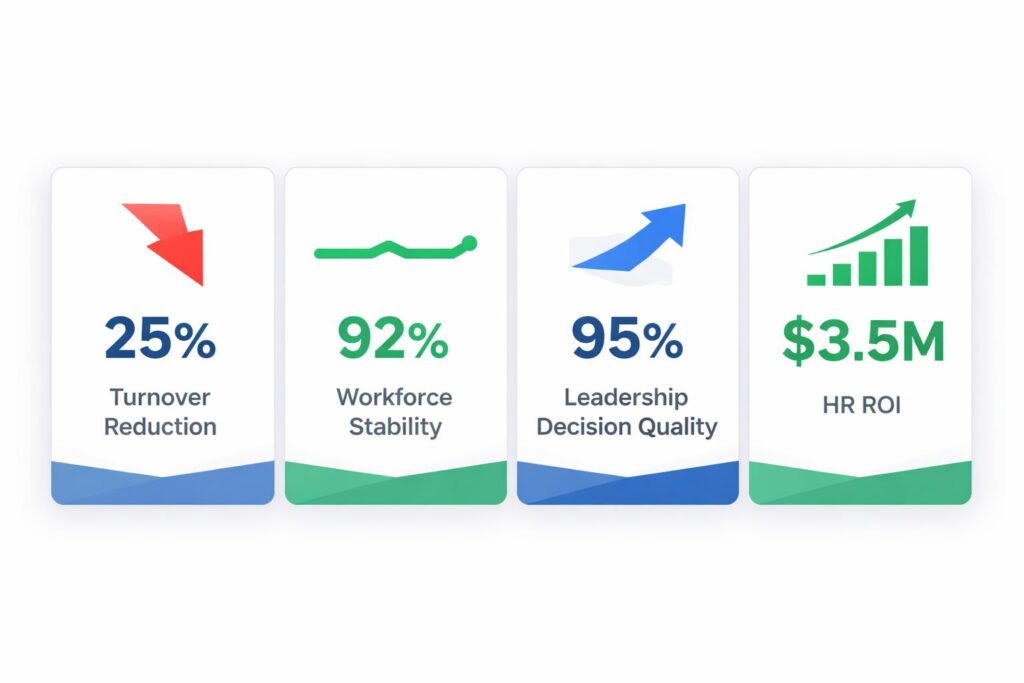
The business case for predictive HR analytics rests on measurable outcomes across four dimensions. Understanding each helps organisations set realistic expectations and build the right success metrics before deployment.
The following table summarises the primary impact areas, with representative outcome ranges from documented enterprise implementations.
| Impact Area | What It Measures | Typical Outcome Range |
|---|---|---|
| Turnover cost reduction | Savings from avoided replacement cycles | 10-25% reduction in voluntary attrition within 12-18 months |
| Workforce stability | Team continuity, institutional knowledge retention | Improved team tenure and reduced productivity drag from churn |
| Leadership decision quality | Quality and timeliness of talent decisions | Earlier succession planning, fewer surprise departures |
| HR initiative ROI | Return on development, compensation, and engagement spend | Higher return from targeted vs. uniform programme deployment |
Reduced Employee Turnover Costs
The most immediate and quantifiable impact is the reduction in replacement costs. Organisations that identify high-risk employees early and intervene effectively retain individuals who would otherwise have left, avoiding the full cost cycle of separation, recruitment, onboarding, and productivity ramp-up. Documented implementations across enterprise and mid-market organisations have demonstrated voluntary turnover reductions of 10 to 25 percent within 12 to 18 months of deployment, with ROI calculations that typically recover implementation costs within the first year.
Improved Workforce Stability and Engagement
Beyond direct cost savings, lower attrition rates preserve institutional knowledge, maintain team cohesion, and protect customer relationships. Teams that work together over extended periods develop communication efficiencies and trust-based collaboration that new-hire-dependent teams cannot replicate quickly. Retention analytics supports this stability systematically rather than leaving it dependent on individual manager relationships.
Better Leadership and Talent Decisions
When executives understand the flight risk profile of their senior leadership pipeline, succession planning becomes substantially more rigorous. When hiring managers can anticipate which teams face near-term attrition, they can begin talent acquisition before vacancies create operational disruption. Predictive analytics elevates HR business partnership from retrospective reporting to genuine strategic counsel.
Higher ROI From HR Initiatives
Predictive analytics enables HR functions to allocate finite budgets more intelligently. Development programmes, compensation adjustments, flexible work arrangements, and recognition initiatives all deliver higher ROI when targeted at populations with identified risk profiles rather than distributed indiscriminately. The shift from broad-based to precision HR investment is one of the clearest strategic advantages organisations gain from predictive analytics in HR.
Challenges and Risks of AI-Driven Retention Analytics
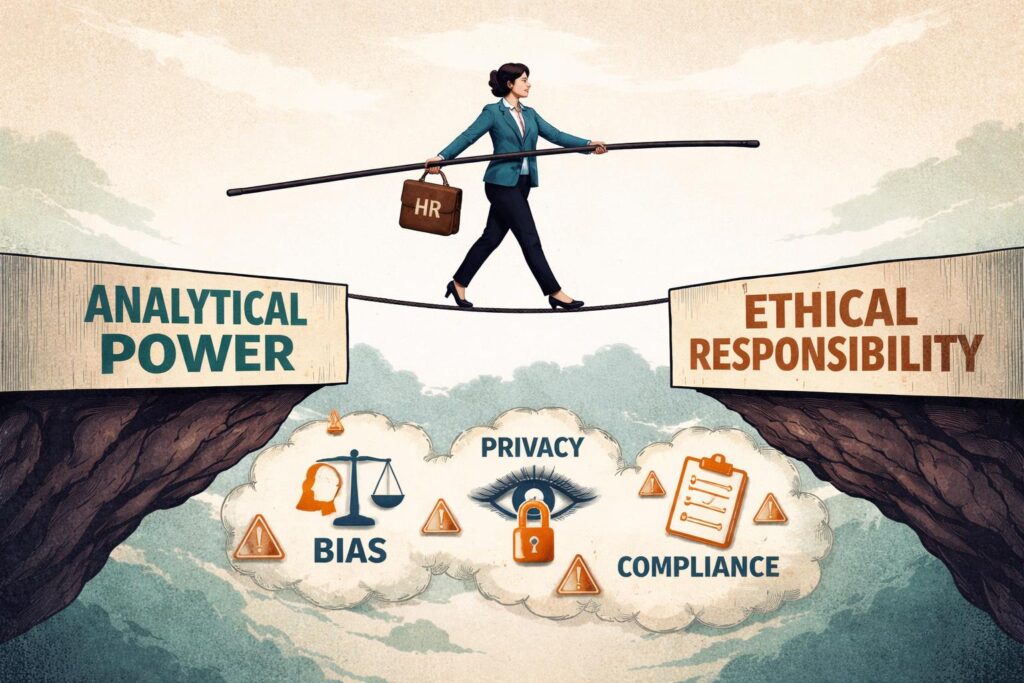
Predictive HR analytics delivers real value, but it also introduces risks that organisations need to manage deliberately. The technical challenges are real, but the ethical and organisational ones are often harder to navigate.
Approaching these challenges early – rather than discovering them after deployment – is the difference between a programme that builds trust over time and one that creates legal exposure or employee backlash.
Data Privacy and Ethical Considerations
Employees have reasonable expectations about how information they provide – through surveys, performance reviews, or digital activity – will be used. Organisations that deploy retention analytics without clear communication, genuine consent frameworks, and meaningful data minimisation risk eroding the trust that engagement programmes are designed to build. Legal requirements set the floor; ethical responsibility extends further.
Best-practice organisations establish employee data charters that specify what data is collected, how it is used, who can see model outputs, and how individuals can request corrections or raise concerns. HR analytics leaders who involve employees in designing these frameworks – rather than implementing monitoring quietly – consistently report higher programme acceptance and more useful data quality.
Bias and Fairness in HR Models
Machine learning models trained on historical HR data inherit the biases embedded in that history. If past promotion decisions, performance ratings, or compensation outcomes were influenced by demographic bias, the model learns to replicate those patterns. Unchecked, this means predictive tools may systematically direct retention investment away from groups that were historically undervalued – compounding existing inequities rather than addressing them.
Addressing algorithmic bias requires ongoing fairness audits testing model outputs across protected demographic groups, bias correction applied during training, and standing organisational accountability for model fairness as a production responsibility, not a one-time compliance check.
Organisational Readiness and Adoption
Technical capability is necessary but not sufficient. Many organisations invest in sophisticated models only to find that outputs sit unused because managers do not know how to interpret risk scores or lack confidence in acting on algorithmic recommendations. Data literacy among HR business partners, a supportive management culture, and CHRO or CPO-level sponsorship are the organisational conditions that determine whether analytical insight actually changes behaviour.
Integration With Existing HR Systems
Most enterprise HR environments are characterised by fragmented technology landscapes – legacy HRIS platforms, best-of-breed point solutions, and recently acquired SaaS tools coexisting with limited native interoperability. Building predictive analytics on top of this infrastructure requires careful API strategy, ETL pipeline design, and data modelling that accommodates schema inconsistencies across source systems. Organisations that underestimate integration complexity frequently experience delayed deployments and degraded model performance from incomplete training data.
Best Practices for Implementing Predictive Analytics in HR
A successful implementation follows a predictable pattern: start focused, build trust, align stakeholders, and scale only once the foundation is solid. The organisations that try to do everything at once typically achieve nothing reliably.
Start With High-Risk Roles or Teams
Deliver the fastest and most defensible value by focusing initial deployments on the roles or teams where attrition is most costly or most frequent. Customer-facing technical roles, key account managers, and mid-level engineering leads are positions where a single departure creates disproportionate disruption. Starting narrowly lets organisations demonstrate ROI quickly, build internal capability, and refine the analytics approach before scaling to broader workforce coverage.
Build Transparent and Explainable Models
Transparency is a design principle, not a constraint. From the outset, select modelling approaches and explainability tools that allow HR teams to articulate to any stakeholder why a specific risk score was generated and what factors drove it. This discipline should extend to documentation standards, model cards that describe training data and performance characteristics, and clear protocols for how risk outputs are used in people decisions.
Align HR, IT, and Leadership Stakeholders
Predictive analytics programmes that succeed are never purely HR technology projects. They require IT ownership of data infrastructure, legal oversight of privacy and compliance, and executive sponsorship that treats people analytics as a strategic agenda item. CHRO, CTO, and CFO alignment on programme objectives, investment levels, and success metrics is typically the single most important factor in whether a programme scales or stalls.
Partner With Experienced HR Analytics Teams
Building predictive HR analytics capability from scratch is a substantial investment in time, talent, and technology. Partnering with specialists who have deployed similar solutions across multiple enterprise contexts substantially reduces risk and accelerates time-to-value. Experienced partners bring pre-built data models, validated feature libraries, and implementation methodologies that would take internal teams years to develop independently. The internal investment can then focus on domain knowledge and change management skills – the capabilities that are inherently organisational and cannot be imported.
Real-World Examples of Predictive Analytics in HR
The following cases illustrate how organisations across different sectors and sizes have applied predictive analytics to improve employee retention. Each follows a simple structure: the problem that triggered the initiative, the solution deployed, and the measurable result.
Enterprise Retention Analytics Platform
Problem: A global professional services firm with 12,000 employees was experiencing voluntary turnover of 22% annually among senior consultants, generating replacement costs exceeding $40 million per year. Exit interview data revealed recurring dissatisfaction themes but offered no ability to anticipate who would leave next.
Solution: A predictive attrition model was deployed integrating performance review data, project utilisation rates, compensation benchmarking, and engagement survey scores. Risk scores were surfaced in HR business partner dashboards with explainable driver breakdowns. High-risk individuals triggered structured 30-day check-in protocols.
Result: Voluntary turnover in the target tier reduced by 18% within 12 months. HR business partners reported more informed and effective retention conversations. The programme recovered its full implementation cost within 8 months.
AI-Driven People Analytics Solution
Problem: A mid-market fintech company growing at 40% annually was struggling to retain critical engineering talent. Rapid scaling had diluted management quality and made it nearly impossible to identify at-risk individuals before they had already accepted competing offers.
Solution: An AI-powered people analytics platform was deployed combining HRIS data with real-time engagement signals from collaboration tools. Machine learning models scored individual flight risk weekly, with automatic alerts to HR business partners when risk thresholds were crossed.
Result: Time-to-intervene on at-risk employees shifted from an average of 6 weeks post-resignation notice to 8 weeks before resignation. Engineering attrition fell by 23% over the following year, and the company sustained its growth trajectory without a proportionate increase in recruitment spend.
HR SaaS Platform With Churn Prediction Module
Problem: An HCM platform vendor serving mid-market retail clients identified that their customers were struggling with seasonal workforce churn in distribution and store operations roles. Industry churn in these roles exceeded 40% annually.
Solution: A churn prediction module was built into the existing HR SaaS platform, using historical employment patterns, attendance records, and scheduling data to score individual attrition risk. Insights were surfaced to store managers via the mobile-optimised manager interface.
Result: Pilot clients reported average reductions in seasonal churn of 15 to 20%, driven primarily by earlier identification of disengaged employees and more targeted retention bonuses. The module became a key product differentiator contributing measurably to client renewal rates.
Workforce Analytics for Distributed Teams
Problem: A global technology company managing distributed engineering teams across 14 time zones had limited visibility into remote employee experience and was seeing significantly higher attrition in remote-first teams compared to office-based counterparts.
Solution: A workforce analytics programme incorporated digital engagement metrics – meeting participation, response time patterns, voluntary collaboration activity – alongside standard HR signals. Retention models were calibrated separately for remote and hybrid populations to account for behavioural differences.
Result: The programme identified that attrition risk in remote teams was disproportionately driven by isolation signals and manager accessibility gaps. Targeted manager training and structured connection programmes reduced remote employee attrition by 27% within 18 months.
Predictive Analytics for a High-Growth Scale-Up
Problem: A Series C technology company had grown from 80 to 400 employees in 18 months and was losing mid-level managers as founding-era culture strained under rapid growth pressures. The People Operations team had no systematic way to identify which team leads were most at risk before they resigned.
Solution: A lightweight, highly explainable predictive model was deployed using existing HRIS, performance, and engagement data supplemented by structured pulse surveys designed to capture management-specific stress indicators. Simplicity was a deliberate choice to maintain trust with a sceptical leadership team.
Result: Five of seven employees identified as high-risk in the first model run were successfully retained through equity refreshes, executive mentoring pairings, and explicit career path conversations. Two left voluntarily for reasons unrelated to work environment, validating the specificity of the model’s risk identification.
Conclusion
Predictive analytics in HR represents a genuine and durable shift in how organisations understand and manage their workforce. The limitations of retrospective reporting – measuring what has already been lost – are too consequential to accept in a competitive talent market. AI-driven HR analytics provides the forward-looking capability that workforce strategy has historically lacked: the ability to see risk before it becomes attrition, and to act with the specificity and timing that meaningful intervention requires.
The organisations that will define best practice in workforce management over the coming decade are investing in this capability now – building data infrastructure, developing model governance frameworks, and cultivating the change management capacity that turns analytical insight into manager behaviour. The future of HR is not reactive or intuition-led. It is proactive, precision-oriented, and powered by AI. For organisations prepared to make that transition, the returns in stability, performance, and leadership decision quality are substantial and compounding.
Ready to Build Predictive Analytics Into Your HR Strategy?
Our team specialises in designing and deploying AI-powered HR analytics solutions for enterprise and mid-market organisations – from data architecture and model development through to change management and adoption. Whether you are exploring HR analytics, evaluating AI development capabilities, or scoping an HR software development partnership, we can help you move from ambition to measurable impact. Contact us to discuss how predictive retention analytics can work for your organisation.