


Software Testing and QA Services
Bugs found before launch are problems solved. Bugs found by users are trust lost. We make sure it is the former. Genius Software provides software testing and QA services that cover your product end to end: manual testing, test automation, performance validation, security assessment, and regression coverage, with a clear report after every cycle so you know exactly what ships and what does not.
Why Teams Choose Genius Software for QA
We help make your software work perfectly. Our team of skilled testers and modern tools find and fix problems before your users ever see them. Think of us as your software quality experts, making sure everything runs smoothly.

1. Deep QA Expertise
Our testers bring production experience across web, mobile, API, and enterprise systems. They understand how flaky tests, undocumented edge cases, and environment drift affect release confidence, and they design test strategies that account for the messy reality of shipping software, not the clean version in a staging demo.
2.Tailored Test Strategies
No two products carry the same risk profile. We build testing approaches around your architecture, release cadence, and critical user paths. A fintech payment flow, a healthcare patient portal, and a high-traffic e-commerce checkout each demand different coverage priorities. We design for yours.
3. Modern Tooling and Frameworks
We use the right tools for your stack, not a default set we apply everywhere. Playwright, Cypress, and Selenium for UI automation. Appium for mobile. Postman and custom scripts for API validation. JMeter and k6 for load testing. TestRail and Jira for traceability. GitHub Actions and GitLab CI for pipeline integration.
4. Measurable Outcomes
We report what matters: requirement coverage, defect density by severity, defect leakage to production, regression execution time, and release readiness. You get structured summaries after every cycle, not raw logs that require interpretation.
5. Embedded Communication
We work as an extension of your engineering team, not a separate function that appears at the end with a pass-fail verdict. Our testers join your standups, write tickets in your system, and communicate findings in language developers can act on without back-and-forth clarification.
6. Flexible Engagement Structures
One QA engineer to backfill a gap, a dedicated automation team to build coverage from scratch, or a full QA function embedded in your sprints. Time and material, fixed price, or monthly retainer. We structure the engagement around what your release cycle actually needs.

Our Core QA Testing Services
We cover the full testing spectrum, from functional validation through security and accessibility. Each service is scoped to your product risk areas, not applied as a generic checklist.
Functional Testing
Features behave according to requirements; business logic, calculations, workflows, and user flows execute correctly. Every release, before UAT, after any feature change.
Regression Testing
Existing functionality remains intact after new code is merged; no silent breakage in previously stable areas. After every sprint, before release, during hotfix validation.
Test Automation
Repetitive and critical paths are covered by maintainable automated suites that run in CI and catch issues before manual review. When release frequency outpaces manual testing capacity.
API Testing
Endpoint contracts, data validation, authentication, error handling, and integration behavior across services. For microservices, headless architectures, mobile backends, third-party integrations.
Performance & Load Testing
Response times, throughput, concurrency limits, and degradation points under normal and peak load. Before launch, before traffic spikes, after infrastructure changes.
Security Testing
Vulnerability scanning, authentication flaws, injection risks, and data exposure points. Before production launch, after major architecture changes, annually for compliance.
How Our Software Testing Services Work
Our process produces clear artifacts at every stage so you know what has been tested, what failed, and what is ready to ship.
1
Test plan and risk assessment
We review requirements, architecture, and release criteria to define what must be tested, how it will be tested, and what done means for your product. Output is a test plan with scope, environments, entry and exit criteria, and a traceability matrix mapping tests to requirements.
2
Test cases and automation scripts
We write detailed test cases covering positive paths, negative paths, boundary conditions, and edge cases. For automation candidates, we script maintainable suites with clear naming, modular structure, and assertions that fail for real reasons, not timing or selector fragility.
3
Execution logs and defect reports
Manual testing explores the product the way real users do, catching behavioral and visual issues automation misses. Automated testing runs repetitive and critical paths in CI, providing fast feedback on every code change. Both streams feed into the same defect tracking system.
4
Bug reports with reproduction steps
Every defect is logged with steps to reproduce, environment details, severity classification, and screenshots or logs where helpful. We prioritize by user impact and business risk, not just technical severity, so your developers know what to fix first.
5
Regression results and sign-off checklist
After fixes are deployed, we verify resolutions and run regression suites to confirm no new breakage was introduced. Cross-browser, cross-device, and end-to-end validation of critical user paths happen here before any release sign-off.
Our Engament Models
1. Time and Material
The right structure when testing scope will evolve with the product. You maintain full visibility into what is being worked on and can redirect priorities as release plans change. Works well for long-term product development and teams shipping frequently.
2. Fixed Price
Scope, timeline, and budget agreed before testing begins. No mid-project adjustments, no surprise invoices. The right fit when requirements are clear and you need cost certainty for a defined testing engagement.
3. Monthly Salary + Fee
A dedicated QA engineer or team working exclusively on your product, billed monthly. Direct involvement, consistent availability, and deep product context that only comes from sustained engagement over multiple release cycles.

QA Metrics We Report
You should not need a testing background to understand whether your product is ready to ship. We report metrics that translate test activity into release decisions.
Requirement Coverage
Percentage of documented requirements validated by at least one test case. Gaps are flagged before they become untested paths in production.
Defects by Severity
Breakdown of critical, major, minor, and trivial defects found per cycle. Trends over time show whether quality is improving or degrading.
Defect Leakage
Number and severity of defects discovered in production that should have been caught during testing. A direct measure of test effectiveness and coverage quality.
Regression Execution Time
How long the full regression suite takes to run, and how that changes as automation coverage grows. Faster feedback means faster releases.
Test Pass Rate
Percentage of tests passing in the latest cycle, with failed tests categorized by root cause: code defect, environment issue, test instability, or requirement change.
How We Help Make Your Software Better
Quality assurance is not a phase that happens after development finishes. It is a continuous function that runs parallel to engineering, catching issues when they are still cheap to fix and giving your team confidence in every release.

We Validate Before Users Do
Our testers find problems before they reach production. Every critical path is exercised, every edge case is considered, and every defect is documented with enough detail that developers can reproduce and resolve it without a back-and-forth. The cost of fixing a bug in development is a fraction of the cost of fixing it after customers have seen it.
We Build Test Coverage That Scales
Manual testing alone cannot keep pace with frequent releases. We design automation frameworks that grow with your product: maintainable scripts, clear structure, and CI integration that gives your team feedback within minutes of every merge. The result is faster releases with the same or better confidence.
We Integrate Into Your Workflow
We work in your tools, your ticketing system, and your release schedule. Whether you run two-week sprints, continuous deployment, or fixed-scope releases, our QA process adapts to how your team already operates. Testing becomes a pipeline stage, not a bottleneck.
We Report Clearly and Honestly
Every test cycle produces a structured summary: what was tested, what passed, what failed, and what that means for release readiness. No raw logs that require interpretation. No vague pass-fail statements. Just the information you need to make a ship decision with confidence.
We Own Quality Outcomes
We measure success by whether your releases are stable, not by whether test cases were executed. If a defect reaches production, we treat it as a coverage gap to close, not an isolated incident. Our responsibility extends to the quality of the release, not just the activity of testing.

What Makes Us Different
We’re not just another testing vendor. We work like a team that genuinely cares about your product — and it shows in how we communicate, how we respond, and how we treat every project we touch.

We Speak Plain Language
No confusing tech talk, no jargon-heavy reports. We explain what we find, why it matters, and what needs to happen next — in a way that everyone on your team can understand and act on.

We Work Around Your Schedule
Your timeline is our timeline. We adapt to your release cycles, sprint schedules, and deadlines — so testing never becomes the bottleneck that holds your team back.

Quick Support
Questions don’t sit unanswered. When something urgent comes up, we’re reachable, responsive, and ready to help — not hiding behind a ticketing system.

We Fix Problems Early
That’s the whole job. We look at your software the way a real user would — and then go further, testing the edge cases and failure points that most people wouldn’t think to check.

Clear And Complete
Simple process, serious coverage. We don’t overcomplicate how we work, but we don’t cut corners either. You get clear, structured testing that covers what actually matters.

Your Software, Our Care
We take the same care with your product that we’d want someone to take with ours. That means attention to detail, honest feedback, and a genuine investment in getting it right.
Let’s Make Your Software Better
Choosing Genius Software as your testing partner comes with real, practical benefits — not just a checklist of services.
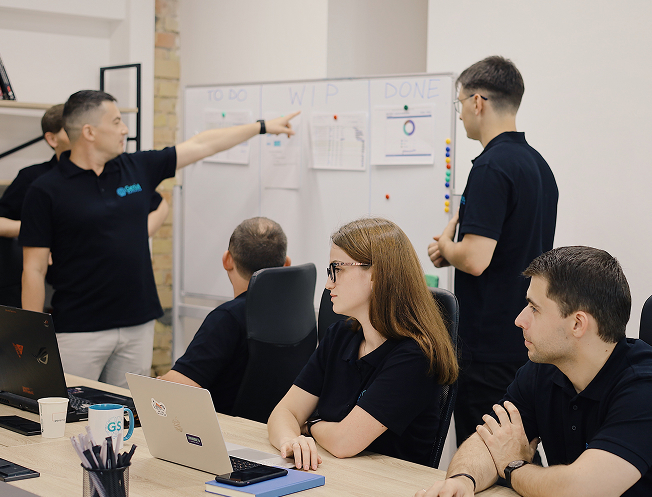
Whether you need a quick pre-launch check or a long-term testing partner, we’re here for you. We make the process simple, transparent, and hassle-free — so your team can stay focused on building while we make sure everything works the way it should.
We fit into your workflow without disruption. Our testers get up to speed quickly, communicate clearly, and treat your deadlines like their own. You’ll always know what we’re working on, what we’ve found, and what comes next.
Good testing means fewer problems after launch — fewer support tickets, fewer frustrated users, fewer late-night fixes. The time we spend catching issues now saves you significantly more time down the road.
Our Portfolio


Our Clients Say
Genius Software developed a healthcare platform for a smart solutions and innovative products firm. The team created a secure platform for booking and managing appointments with patient and doctor dashboards. Genius Software’s work resulted in a 60% reduction in average booking time, a 4.9/5 user satisfaction score, and expansion to two new markets. The team was proactive, detail-oriented, and made effective UX decisions. They worked in sprints, kept the client updated, and solved problems quickly.

Iryna Stakhiv
Review from


Spain
5.0
Thanks to Genius Software’s work, the client achieved a 50% reduction in loan processing time, and the platform processed over 70% of loan requests. The team was transparent, responsive, and quick to adjust to changes. Genius Software’s expertise and ability to solve business problems stood out.

Michael Carter
Review from

Estonia
5.0
Working with Genius Software has been a great experience for our team at Artemis. ʼThey really stand out because of their professional approach and deep technical knowledge.
Communication was always clear and timely, which made the whole development process feel straightforward and predictable. They delivered exactly what we needed, earning a well-deserved 5.0 rating. I’d definitely recommend them to anyone looking for a reliable, expert development partner.

Attila P.
Review from


Hungary
5.0
I’ve seen many partnerships, but Genius stood out. They fit right into our workflows, were responsive, and offered smart suggestions. Their balance of technical expertise with usability and compliance impressed us. The platform is now fast, secure, and delivering real value – this felt like a partnership, not outsourcing.

Alina
Review from

Estonia
5.0
We very enjoyed working with Genius team on our web-app project and they helped our team to deliver this project within the deadline. All new features were delivered as planned using clear communication, they also helped with the solution architecture improvements so we highly recommend this team and will be happy to work again, thanks guys!

Elliot Baker
Review from

United States
5.0
Genius Software delivered a stable, fast, and secure platform on time, with zero major bugs at launch and 99.9% uptime. The team led a smooth and transparent process, conducting sprints and demos and responding quickly to all requests. They were also proactive and handled all changes well.

Tetiana Bykova
Review from

Cyprus
5.0
Genius Software developed the backend and mobile features of a fitness app. The team built the app’s architecture, including the workout and nutrition program modules and progress tracking system. Genius Software delivered a stable and personalized app, resulting in positive user feedback and exceeding adoption projections. The team executed a clear and straightforward process, ensuring a smooth launch.

Andrii Kovalenko
Review from

England
5.0
Excellent work! Your attention to detail, thorough testing, and clear documentation were top-notch. I appreciate your proactive communication, timely delivery, and professionalism throughout the project. Looking forward to working with you again in the future!

Chris Workum
Review from

Netherlands
5.0
Working with the Genius team was a game-changer for our complex Java project! They delivered every feature on time, kept communication crystal clear, and even elevated our solution architecture. Highly recommended — we’d gladly team up again!

Viktoria
Review from
United States
5.0
I’ve had a great experience working with Genius Software on our Identity Governance and Administration SaaS platform. Building enterprise-level security software is never easy, but their team handled the complexity with total professionalism.
The technical expertise they brought to the table was obvious from day one. They didn’t just follow instructions; they really dug into the architecture to ensure the platform was both scalable and secure.

Patrick P.
Review from
USA
5.0
Genius team is great, super proactive, very on top of the tasks and what is required, communicating with multiple people and navigating what was new to her fast. Proposing also improvements for the team and helping to drive some.
Ryan G.
Review from
USA
5.0
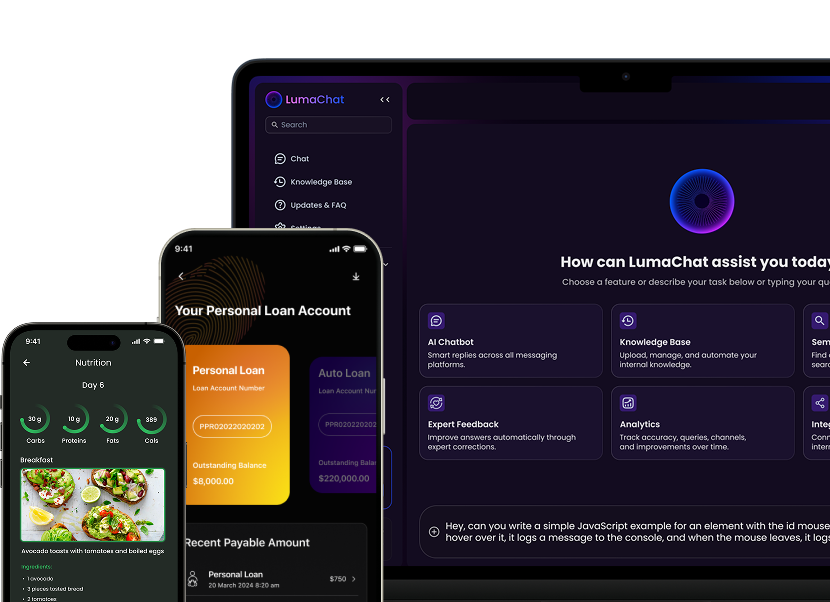
Genius Software developed and deployed an AI chatbot for a mobile solutions company. The team created a self-learning, multilingual system with a microservices-based architecture and live response accuracy. After launching the chatbot, the client experienced a 70% reduction in repetitive expert inquiries, over 90% response accuracy across five languages, and 100% user adoption within the first month.

Kate Zashalovska
Review from

Ukraine
5.0
Genius Software has delivered a high-quality product that has reduced manual transaction review time by four times, fraud detection, and financial losses from fraudulent operations. The team follows an Agile methodology, adapts well to shifting priorities, and integrates seamlessly with the client.

Olexandr
Review from
Estonia
5.0
Genius Software built a blockchain based platform for managing on chain operations and user interactions for our mutual client. The platform served as a single environment where users could connect wallets, interact with smart contracts, and track transaction activity in real time. They get things done fast and with minimal fuss. The product just works.

Anastasiia Cherednichenko
Review from
Ukraine
5.0
It was a pleasure working with the Genius Software team on our embedded platform development project. The team is incredibly organized and made the entire development process feel seamless. The technical execution was spot on, and their ability to manage the project’s moving parts ensured we stayed on schedule without any major hiccups. We were happy to provide a 5.0 rating for the quality of work delivered. I highly recommend the team for anyone needing a reliable, sharp project manager for technical builds.
Jordi B.
Review from

United Kingdom
5.0
Genius Software developed and designed a blockchain platform for an IT company. Genius Software delivered a reliable platform that was adopted shortly after release. The team provided clear structure, quick turnaround, and full visibility into all blockchain activity. Moreover, Genius Software communicated effectively through virtual meetings, emails, and messages.

Alexey Cherevuta
Review from
Ukraine
5.0
Genius Software developed a cloud-based hospitality platform for a software development company. They built the infrastructure, integrated multiple systems, and created user-facing apps. The platform was launched on time and successfully enabled the client to onboard over 1,000 properties while remaining stable under heavy booking traffic. The team consistently met deadlines and impressed the client with their open communication, reliability, and high-quality work.

Khrystyna Gorodnyk
Review from
Estonia
5.0
We enjoyed working with Genius team on our solution architecture technical audit and code review, he helped our team to identify technical design issues and improve it, also suggested cool engineering AI tools for our dev team, so we highly recommend him and will be happy to work again.

Oleksii Myrnyi
Review from
Estonia
5.0
Great help with our business analysis projects and some advice as well.

Caroline B.
Review from

Denmark
5.0
Genius Software delivered a production-ready platform with secure and scalable infrastructure. The client adopted the platform quickly, and property listings and ad management became much faster. The team had clear deadlines and solid deliveries.

Iryna Seleman
Review from
Estonia
5.0
Genius Software designed and developed an AI-based mobile app for a software development company. The app had an OCR system that extracted data, auto-filled forms, and integrated with compliance systems. Genius Software delivered an impressive product with an OCR accuracy above 95%, a 40% reduction in inspection time, and 90% fewer manual errors in compliance reports.

Viacheslav K.
Review from

Saudi Arabia
5.0
I really enjoyed working with the Genius Software team on our recent project. They are an exceptional team that is consistently positive, friendly, and efficient.
Beyond their technical skills, they genuinely promote a great working environment, which makes the whole process much smoother. I highly recommend them for any team looking for professionals who can keep things organized while maintaining high morale.

Erik Saar
Review from
Estonia
5.0
The Genius QA Automation team did a fantastic job on our project. They were incredibly helpful throughout the process, providing high-quality testing that gave us a lot of confidence in our product. It’s clear they know their way around automation, and they were quick to adapt to our specific testing needs. I’d be happy to keep working with them on future QA and testing tasks. They definitely earned their 5.0 rating. If you need a team that’s efficient and easy to collaborate with, I highly recommend them.
Emma Johansson
Review from
Estonia
5.0
Genius Software delivered a production-ready platform with secure and scalable infrastructure. The client adopted the platform quickly, and property listings and ad management became much faster. The team had clear deadlines and solid deliveries.

Vladislav Komovich
Review from
Ukraine
5.0
We chose Genius Software because they truly understood our business needs. We needed a reliable software partner with skilled engineers, efficient management, and zero downtime — and that’s exactly what they delivered. Their flexibility, transparency, and innovative approach continue to add great value to our collaboration.

Jeroen Megchelen
Review from
Netherlands
5.0
The system has produced a significant competitive advantage in the industry thanks to Genius Software well-thought opinions. They shouldered the burden of constantly updating a project management tool with a high level of detail and were committed to producing the best possible solution

Martin Goutry
Review from
United Kingdom
5.0
We were looking for a trusted technology partner with strong expertise, solid management, and fair pricing. Sergey and the Genius Software team impressed us with their technical knowledge, business understanding, and communication. They built a skilled engineering team, implemented a mature Scrum process, and delivered a high-load web, mobile, and API solution on time and within budget.

Matas Jakutes
Review from
USA
5.0
Sergey and his team helped us rebuild our web platform from a legacy system to a modern, high-load technology stack. They established a mature project management process, designed and developed scalable architecture, and delivered the solution within our budget and timeline. Their dedication and transparency ensured full visibility at every stage of the project.

Anders Filipsen
Review from
Denmark
5.0

Meet us in Estonia
Sergey Lvov
Chief Executive Officer
Address
Talinn, Kesklinna Linnaosa,
Kaupmehe tn 7/120, 10114

Meet us in Poland
Sergey Lvov
Chief Executive Officer
Address
Warsawa, Krakowskie
Przedmieschie 13, 00-071

Meet us in USA
Sergey Lvov
Chief Executive Officer
Address
USA, Tampa, FL 33602, 501 E
Kennedy Blvd #1400

Meet us in Ukraine
Veronika Marchenko
Business Development
Address
Ukraine, Kyiv,
Yaroslaviv Val 15, 01001
Contact Us
Have a question or idea? Our team is here to help
Frequently asked questions
What do software testing services include?
When should I automate testing and when is manual testing better?
Automate repetitive, stable, and high-risk paths that run on every release: login, checkout, payment flows, core user journeys. Manual testing is better for exploratory validation, new features with changing requirements, usability assessment, and one-off scenarios where automation maintenance would cost more than the value it provides. Most effective QA strategies combine both.
How do you integrate QA into our sprints and CI pipeline?
We embed QA engineers into your sprint ceremonies and configure automated tests to run on every merge, build, and deployment candidate. Test results appear in your existing tooling, whether that is Jira, GitHub, GitLab, or Azure DevOps. Defects are logged where your developers already work, and release gates can be configured to block deployment when critical tests fail.
Which testing tools and frameworks do you use?
We use Playwright, Cypress, and Selenium for UI automation; Appium for mobile; Postman and REST Assured for API testing; JMeter and k6 for performance testing; TestRail and Jira for test management; and GitHub Actions, GitLab CI, or Jenkins for CI integration. We select and confirm tools based on your existing stack rather than applying a default kit.
Can I hire a dedicated QA engineer or a remote QA team?
Yes. We provide individual QA engineers for staff augmentation, dedicated QA teams for full coverage, and project-based testing engagements for specific releases or audits. Every engineer is vetted for production experience, not just certification. You interview candidates before engagement and can scale the team up or down as your release cycle demands.
How do you report bugs and test results?
Every defect is logged with reproduction steps, environment details, severity classification, screenshots or logs where relevant, and a clear description of expected versus actual behavior. After each test cycle, we deliver a test summary report with coverage metrics, defect statistics by severity, open risks, and a release readiness recommendation. Reports are written for product and engineering leadership, not just technical teams.
How much do outsourced QA services cost?
Pricing depends on scope, product complexity, and engagement model. A focused regression automation project for an existing product typically takes 2 to 4 weeks. A full QA engagement with manual and automated coverage for a new product release ranges from 4 to 12 weeks. After a discovery call, we provide a specific figure based on your actual requirements, not a generic estimate.
Do you test mobile apps and APIs?
Yes. We test native iOS and Android applications across real devices, OS versions, and network conditions. We also validate REST and GraphQL APIs for contract compliance, authentication, error handling, data integrity, and integration behavior. Mobile and API testing can be delivered as standalone services or as part of a full product QA engagement.


