


UI/UX Design Services That Make Products People Want to Use
Good design doesn’t announce itself. It removes friction, guides attention, and makes the next step obvious, so users accomplish what they came to do without thinking about the interface at all. We provide end-to-end UI/UX design services for web and mobile products, from early-stage discovery through pixel-perfect delivery and post-launch iteration.
How Can We Help You With UI/UX?
Most digital products fail not because the technology is wrong, but because nobody validated whether real users would understand how to use it. We fix that before development starts — and long before it becomes expensive to change.
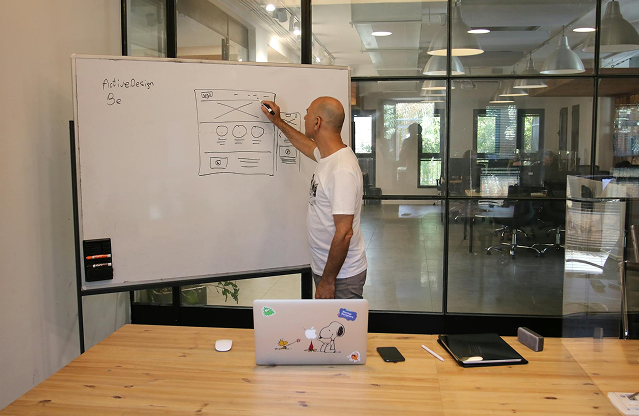
Our process begins with your users, not your preferences. We run structured research to understand how your target audience thinks, what they’re trying to accomplish, and where existing solutions let them down. That research directly shapes every design decision that follows: information architecture, interaction patterns, visual hierarchy, and the micro-details that determine whether a product feels polished or frustrating.
From initial wireframes through interactive prototypes and final design handoff, we stay involved until your engineering team has everything they need to build exactly what was designed. We work across web, iOS, Android, and complex enterprise interfaces: responsive layouts, design systems, accessibility standards, and component libraries included.
The measure of our work isn’t how the screens look in a Figma presentation. It’s whether users complete tasks faster, return more often, and require less support after launch.
Why Teams Choose to Grow With Us
Bringing in a design team shouldn’t take months of recruitment. We embed quickly, speak the same language as your engineers and PMs, and start contributing to real work from the first week.

Cost-Effective Without the Compromise
You get senior designers who have shipped production products (not portfolio work) without the overhead of full-time hiring. No recruitment fees, no onboarding delays, no office costs. The work quality is there. The inflated agency markup isn’t.

Designers Who Think in Systems
Every screen we design accounts for edge cases, error states, empty states, and the full interaction flow, not just the happy path that looks good in a demo. We think about how real users navigate under real conditions, and design for that.

Agile and Transparent by Default
We work in short design sprints with clear deliverables at each checkpoint. You always know what’s being worked on, what’s coming next, and why specific decisions were made.

Cross-Discipline Coverage
Our team spans UX research, product design, visual design, motion, and design systems. You don’t need five separate specialists: you get the right people for each phase of your project.

Shared Ownership of Outcomes
We track what happens after launch. If usability testing reveals a problem, we fix it. If analytics show a drop-off point we didn’t anticipate, we iterate. Your product’s success is the measure of ours.

Flexible Engagement Structures
Project-based, embedded within your team, or long-term retainer: we work the way that fits your situation. One designer or a full squad, short sprint or extended product lifecycle support.
Our UI/UX Services
We cover the full design lifecycle — from understanding your users to handing off production-ready assets your engineers can build directly from.
| Service | What It Involves | When You Need It |
|---|---|---|
| User Research | Interviews, surveys, usability observations, behavioral analysis | Before design begins, or when existing designs aren’t converting |
| Information Architecture | Sitemap design, content hierarchy, navigation logic, taxonomy | New products or significant restructures |
| Wireframes | Low and mid-fidelity layouts, flow mapping, annotated screens | Early validation before visual design investment |
| Visual Design | UI design, design systems, component libraries, brand application | When structure is validated and you need production-ready screens |
| Interaction Design | Micro-interactions, animation specs, state transitions, gesture design | Complex apps where interaction quality directly affects perception |
| Usability Testing | Moderated and unmoderated testing, heatmaps, session analysis, iteration | Ongoing — before launch and at regular intervals post-launch |
User Research
Before we design a single screen, we understand your users. Interviews, surveys, and structured usability observations tell us what people actually need, not what they say they want, and not what we assume. This research shapes everything that follows: how content is organized, what actions are prioritized, and where the interface needs to get out of the way.
Information Architecture
A well-structured product is one users can navigate without instructions. We map content hierarchies, define navigation models, and design the underlying logic of how your product is organized, so users always know where they are and how to get where they’re going.
Wireframes
Wireframes are where we validate structure before anyone invests in visual design. Low and mid-fidelity layouts let us test flow logic, screen relationships, and interaction patterns early, when changes cost hours, not weeks.
Visual Design
Once the structure is proven, we build the visual layer: UI design that applies your brand system with intention, component libraries your engineers can build from directly, and design systems that keep the product consistent as it grows.
Interaction Design
How an interface moves communicates as much as how it looks. We design the micro-interactions, state transitions, loading behaviors, and gesture responses that make a product feel considered, not just functional.
Usability Testing
We test with real users before launch and after. Moderated sessions, unmoderated remote testing, heatmaps, and session recordings surface what no amount of internal review will catch. Findings feed directly back into the design, not into a report that sits unread.
How We Get Started Together
1
Tell Us
What You Need
Share your product, your problem, or just a rough idea of where you’re headed. No formal brief required: a conversation is enough to understand whether we’re the right fit and what engagement structure makes sense.
2
Get Your Estimate
We come back with a clear picture: scope, timeline, team composition, and cost. Specific numbers, not ranges designed to protect us. You should be able to plan around what we give you.
3
Pick Your Cooperation Model
Dedicated design team, staff augmentation, or fixed-scope project delivery, we’ll walk you through the options and help you choose based on your timeline, budget, and how much internal design capacity you already have.
4
We Start Building
Your designers are in your tools and your communication channels from day one. We follow your processes, align with your engineers early, and start delivering reviewable work within the first sprint.
5
Launch
& Grow
Ship your product, hit your milestone, or scale your team further. Whatever comes next, we’re ready to move with you.
Our Engament Models
1. Time and Material
The right structure when design work is ongoing or when the scope will evolve as the product develops. You maintain full visibility into what’s being worked on and full control over prioritization. Works well for product teams that want a reliable design partner without locking into a fixed scope upfront.
2. Fixed Price
Scope, timeline, and budget agreed in advance, no mid-project adjustments. The right fit when requirements are well-defined and you need budget certainty from the start. Common for discrete design projects: a redesign, a new feature set, or a design system build.
3. Monthly Salary + Fee
For longer-term engagements where you want a dedicated designer or design team working exclusively on your product. Direct involvement, consistent availability, and the kind of deep product context that only comes from sustained engagement.
The Benefits of Our Human-Centered Process
Our rigorous user experience design process placed within agile development frameworks provides a number of advantages:
Increased User Engagement
When software products align closely with consumer goals and mental models, people intrinsically want to use it. The result is regularly active usage of a product and retention over time.
Reduced User Effort
When layout, information flow, labeling, instructions and assistance features lower the effort needed to complete a task, user frustration is alleviated. Goals are reached with less work.
Higher Conversion Rates
We transform raw data into visually appealing and easy-to-understand graphs and charts. When using your digital product is effortless and enjoyable, more visitors will convert to customers.
Boosted Brand Impressions
When interfaces fluidly guide people to their needs, positive brand associations blossom, driving recommendations and loyalty. Better design means more brand visibility.
Lower Development Costs
When UX decisions are guided by research, less rework occurs through app ot web development. Engineers receive clearer specifications, allowing more efficient coding.
Let's Build Something Great Together
Choosing the right development partner makes all the difference. Here’s what you get when you work with Genius Software.
If you have a product that needs better design — or an idea that doesn’t have a product yet — we’re worth talking to. Bring a brief, bring a problem, or just bring a question. We’ll figure out together whether we’re the right team for it, and what a collaboration would actually look like.
We’ve taken products from first wireframe to post-launch iteration across fintech, healthtech, e-commerce, logistics, and enterprise SaaS. The companies we work with best are the ones who care about what their users experience — not just how the product looks in a pitch deck.
No sales pressure. No commitment required from a first conversation. Just an honest look at what you’re building and how we can help.
Our Portfolio


Our Clients Say
Genius Software developed a healthcare platform for a smart solutions and innovative products firm. The team created a secure platform for booking and managing appointments with patient and doctor dashboards. Genius Software’s work resulted in a 60% reduction in average booking time, a 4.9/5 user satisfaction score, and expansion to two new markets. The team was proactive, detail-oriented, and made effective UX decisions. They worked in sprints, kept the client updated, and solved problems quickly.

Iryna Stakhiv
Review from


Spain
5.0
Thanks to Genius Software’s work, the client achieved a 50% reduction in loan processing time, and the platform processed over 70% of loan requests. The team was transparent, responsive, and quick to adjust to changes. Genius Software’s expertise and ability to solve business problems stood out.

Michael Carter
Review from

Estonia
5.0
Working with Genius Software has been a great experience for our team at Artemis. ʼThey really stand out because of their professional approach and deep technical knowledge.
Communication was always clear and timely, which made the whole development process feel straightforward and predictable. They delivered exactly what we needed, earning a well-deserved 5.0 rating. I’d definitely recommend them to anyone looking for a reliable, expert development partner.

Attila P.
Review from


Hungary
5.0
I’ve seen many partnerships, but Genius stood out. They fit right into our workflows, were responsive, and offered smart suggestions. Their balance of technical expertise with usability and compliance impressed us. The platform is now fast, secure, and delivering real value – this felt like a partnership, not outsourcing.

Alina
Review from

Estonia
5.0
We very enjoyed working with Genius team on our web-app project and they helped our team to deliver this project within the deadline. All new features were delivered as planned using clear communication, they also helped with the solution architecture improvements so we highly recommend this team and will be happy to work again, thanks guys!

Elliot Baker
Review from

United States
5.0
Genius Software delivered a stable, fast, and secure platform on time, with zero major bugs at launch and 99.9% uptime. The team led a smooth and transparent process, conducting sprints and demos and responding quickly to all requests. They were also proactive and handled all changes well.

Tetiana Bykova
Review from

Cyprus
5.0
Genius Software developed the backend and mobile features of a fitness app. The team built the app’s architecture, including the workout and nutrition program modules and progress tracking system. Genius Software delivered a stable and personalized app, resulting in positive user feedback and exceeding adoption projections. The team executed a clear and straightforward process, ensuring a smooth launch.

Andrii Kovalenko
Review from

England
5.0
Excellent work! Your attention to detail, thorough testing, and clear documentation were top-notch. I appreciate your proactive communication, timely delivery, and professionalism throughout the project. Looking forward to working with you again in the future!

Chris Workum
Review from

Netherlands
5.0
Working with the Genius team was a game-changer for our complex Java project! They delivered every feature on time, kept communication crystal clear, and even elevated our solution architecture. Highly recommended — we’d gladly team up again!

Viktoria
Review from
United States
5.0
I’ve had a great experience working with Genius Software on our Identity Governance and Administration SaaS platform. Building enterprise-level security software is never easy, but their team handled the complexity with total professionalism.
The technical expertise they brought to the table was obvious from day one. They didn’t just follow instructions; they really dug into the architecture to ensure the platform was both scalable and secure.

Patrick P.
Review from
USA
5.0
Genius team is great, super proactive, very on top of the tasks and what is required, communicating with multiple people and navigating what was new to her fast. Proposing also improvements for the team and helping to drive some.
Ryan G.
Review from
USA
5.0
Genius Software developed and deployed an AI chatbot for a mobile solutions company. The team created a self-learning, multilingual system with a microservices-based architecture and live response accuracy. After launching the chatbot, the client experienced a 70% reduction in repetitive expert inquiries, over 90% response accuracy across five languages, and 100% user adoption within the first month.

Kate Zashalovska
Review from

Ukraine
5.0
Genius Software has delivered a high-quality product that has reduced manual transaction review time by four times, fraud detection, and financial losses from fraudulent operations. The team follows an Agile methodology, adapts well to shifting priorities, and integrates seamlessly with the client.

Olexandr
Review from
Estonia
5.0
Genius Software built a blockchain based platform for managing on chain operations and user interactions for our mutual client. The platform served as a single environment where users could connect wallets, interact with smart contracts, and track transaction activity in real time. They get things done fast and with minimal fuss. The product just works.

Anastasiia Cherednichenko
Review from
Ukraine
5.0
It was a pleasure working with the Genius Software team on our embedded platform development project. The team is incredibly organized and made the entire development process feel seamless. The technical execution was spot on, and their ability to manage the project’s moving parts ensured we stayed on schedule without any major hiccups. We were happy to provide a 5.0 rating for the quality of work delivered. I highly recommend the team for anyone needing a reliable, sharp project manager for technical builds.
Jordi B.
Review from

United Kingdom
5.0
Genius Software developed and designed a blockchain platform for an IT company. Genius Software delivered a reliable platform that was adopted shortly after release. The team provided clear structure, quick turnaround, and full visibility into all blockchain activity. Moreover, Genius Software communicated effectively through virtual meetings, emails, and messages.

Alexey Cherevuta
Review from
Ukraine
5.0
Genius Software developed a cloud-based hospitality platform for a software development company. They built the infrastructure, integrated multiple systems, and created user-facing apps. The platform was launched on time and successfully enabled the client to onboard over 1,000 properties while remaining stable under heavy booking traffic. The team consistently met deadlines and impressed the client with their open communication, reliability, and high-quality work.

Khrystyna Gorodnyk
Review from
Estonia
5.0
We enjoyed working with Genius team on our solution architecture technical audit and code review, he helped our team to identify technical design issues and improve it, also suggested cool engineering AI tools for our dev team, so we highly recommend him and will be happy to work again.

Oleksii Myrnyi
Review from
Estonia
5.0
Great help with our business analysis projects and some advice as well.

Caroline B.
Review from

Denmark
5.0
Genius Software delivered a production-ready platform with secure and scalable infrastructure. The client adopted the platform quickly, and property listings and ad management became much faster. The team had clear deadlines and solid deliveries.

Iryna Seleman
Review from
Estonia
5.0
Genius Software designed and developed an AI-based mobile app for a software development company. The app had an OCR system that extracted data, auto-filled forms, and integrated with compliance systems. Genius Software delivered an impressive product with an OCR accuracy above 95%, a 40% reduction in inspection time, and 90% fewer manual errors in compliance reports.

Viacheslav K.
Review from

Saudi Arabia
5.0
I really enjoyed working with the Genius Software team on our recent project. They are an exceptional team that is consistently positive, friendly, and efficient.
Beyond their technical skills, they genuinely promote a great working environment, which makes the whole process much smoother. I highly recommend them for any team looking for professionals who can keep things organized while maintaining high morale.

Erik Saar
Review from
Estonia
5.0
The Genius QA Automation team did a fantastic job on our project. They were incredibly helpful throughout the process, providing high-quality testing that gave us a lot of confidence in our product. It’s clear they know their way around automation, and they were quick to adapt to our specific testing needs. I’d be happy to keep working with them on future QA and testing tasks. They definitely earned their 5.0 rating. If you need a team that’s efficient and easy to collaborate with, I highly recommend them.
Emma Johansson
Review from
Estonia
5.0
Genius Software delivered a production-ready platform with secure and scalable infrastructure. The client adopted the platform quickly, and property listings and ad management became much faster. The team had clear deadlines and solid deliveries.

Vladislav Komovich
Review from
Ukraine
5.0
We chose Genius Software because they truly understood our business needs. We needed a reliable software partner with skilled engineers, efficient management, and zero downtime — and that’s exactly what they delivered. Their flexibility, transparency, and innovative approach continue to add great value to our collaboration.

Jeroen Megchelen
Review from
Netherlands
5.0
The system has produced a significant competitive advantage in the industry thanks to Genius Software well-thought opinions. They shouldered the burden of constantly updating a project management tool with a high level of detail and were committed to producing the best possible solution

Martin Goutry
Review from
United Kingdom
5.0
We were looking for a trusted technology partner with strong expertise, solid management, and fair pricing. Sergey and the Genius Software team impressed us with their technical knowledge, business understanding, and communication. They built a skilled engineering team, implemented a mature Scrum process, and delivered a high-load web, mobile, and API solution on time and within budget.

Matas Jakutes
Review from
USA
5.0
Sergey and his team helped us rebuild our web platform from a legacy system to a modern, high-load technology stack. They established a mature project management process, designed and developed scalable architecture, and delivered the solution within our budget and timeline. Their dedication and transparency ensured full visibility at every stage of the project.

Anders Filipsen
Review from
Denmark
5.0

Meet us in Estonia
Sergey Lvov
Chief Executive Officer
Address
Talinn, Kesklinna Linnaosa,
Kaupmehe tn 7/120, 10114

Meet us in Poland
Sergey Lvov
Chief Executive Officer
Address
Warsawa, Krakowskie
Przedmieschie 13, 00-071

Meet us in USA
Sergey Lvov
Chief Executive Officer
Address
USA, Tampa, FL 33602, 501 E
Kennedy Blvd #1400

Meet us in Ukraine
Veronika Marchenko
Business Development
Address
Ukraine, Kyiv,
Yaroslaviv Val 15, 01001
Contact Us
Have a question or idea? Our team is here to help
Frequently asked questions
What is UI/UX design?
UI (User Interface) design covers the visual layer of a product — layout, typography, color, components, spacing, and the visual logic that guides attention. UX (User Experience) design covers the full experience of using that product: how it’s structured, how interactions flow, how errors are handled, and whether users can accomplish what they came to do without friction. The two disciplines are closely connected in practice — visual decisions affect usability, and structural decisions affect perception. Most products need both done well.
How long does it take to complete a UI/UX design project?
It depends on scope and starting point. A focused feature design or a single user flow might take two to four weeks. A full product design — from research through high-fidelity screens and a component library, typically runs eight to sixteen weeks. A design system build for a mature product is its own timeline. We give you a specific estimate after an initial scoping conversation, not a range designed to cover uncertainty.
Why is UI/UX design important for my IT project?
Because development is expensive and rebuilding poorly designed interfaces is more expensive. Design done early catches usability problems when they cost days to fix rather than months. Beyond cost, product design directly affects whether users adopt what you build, how often they return, and how much support they require. The ROI on good UX shows up in conversion rates, retention, and reduced support volume.
How do you ensure your designs are user-friendly?
We test with actual users, not internal reviewers who already know the product. Usability testing — moderated sessions, unmoderated remote testing, behavioral analytics, runs throughout the process, not just at the end. Findings are incorporated back into the design before anything goes to engineering. We also apply established accessibility standards and design patterns that reduce cognitive load for users regardless of their familiarity with the product.
How does the UI/UX design process work?
Research comes first: understanding your users, your business goals, and the competitive context. That informs information architecture and wireframes, which we validate before moving into visual design. High-fidelity screens and interactive prototypes follow, along with a design system or component library if the project calls for it. We hand off to engineering with annotated specs, interactive prototypes, and direct availability to answer questions during implementation.
Can you redesign an existing product?
Yes, we can help improve and modernize your existing product’s UI/UX design. Our process includes evaluating the current design, identifying areas for improvement, and implementing changes to enhance user experience and aesthetics.
What is the difference between wireframing and prototyping?
Wireframing is the creation of basic layouts and structures for a design, focusing on content placement and hierarchy. Prototyping builds on wireframes, adding interactive elements to simulate how the final product will work.
What tools do you use for UI/UX design?
We use a variety of industry-standard tools such as Sketch, Figma, Adobe XD, InVision, and others for designing, prototyping, and collaborating with our clients to ensure the best results.


