


AI Agent Development
Custom AI agents that plan, use tools, and complete multi-step tasks with minimal human input, not another chatbot that answers questions and stops there. We design, build, and integrate AI agents into the systems your team already runs, with guardrails that keep them accountable.
What Is an AI Agent
An AI agent is a system built around a language model that plans a sequence of actions, calls external tools or APIs, and executes multi-step tasks with limited ongoing human input — as opposed to a chatbot or LLM application, which generates a response and stops.
The distinction matters for scoping a project correctly. A chatbot answers a question. An AI agent orchestrates workflows, interacts with data, and executes tasks: it can check a database, call an API, take an action based on what it finds, and decide what to do next based on the result — without a person approving each step.
Agentic AI development is the discipline of building that loop reliably: giving an agent the right tools, the judgment to use them appropriately, and guardrails that keep its actions within defined limits. A multi-agent system extends this further — multiple agents, each with a narrower role, coordinating through an orchestration layer to handle a workflow too complex for a single agent to own end to end.
Our AI Agent Development Services
Ai agent development services cover everything from a single-purpose copilot to a coordinated multi-agent system — scoped to the workflow you’re trying to automate, not a generic template.

1. Custom AI Agent Development
Custom ai agent development starts with a specific business process — claims processing, compliance checks, order fulfillment — and builds an agent around it, rather than adapting a generic template to fit. The agent’s tool access, decision logic, and guardrails are scoped to that one workflow.
2. Agentic AI Software Development
Some workflows are too complex for a single agent to own end to end. Agentic ai software development builds multi-agent systems — separate agents handling distinct parts of a process, coordinated through an orchestration layer that manages hand-offs and shared context.
3. AI Virtual Assistant Development
An AI virtual assistant is an agent-based interface for customers or internal teams — but built on the same planning-and-tool-use architecture as any other agent, not a scripted chatbot. AI virtual assistant development means the assistant can look up account data, take actions, and escalate appropriately, not just answer FAQs.
4. AI Agent Integration
An agent that can’t act on real data is just a planner. AI agent integration connects the agent to CRM, ERP, or internal APIs so it can query live records, update a ticket, or trigger a downstream process — the step that turns a proof of concept into something operationally useful.
5. Guardrails & Safety Engineering
An agent’s guardrails are engineered, not bolted on after the fact. This service covers defining the boundaries of what an agent can do autonomously, building in explainability for its decisions, and setting human-in-the-loop checkpoints for higher-risk actions — scoped to the actual risk profile of the workflow, not a one-size-fits-all policy.
6. Agent Support & Optimization
An agent’s first production version is rarely its final scope. This service covers monitoring how the agent performs against real cases, tuning its decision logic as edge cases surface, and expanding its autonomy incrementally as confidence in its performance grows.

Types of AI Agents We Build
- Copilots — Assist a human who remains in control of the final decision; the agent suggests, drafts, or surfaces information, but a person acts.
- Autonomous agents — Complete a defined task end to end with minimal supervision, escalating only when a case falls outside its defined boundaries.
- Multi-agent systems — Coordinate several specialized agents across a workflow too complex or too high-stakes for one agent to handle alone.
How to Develop an AI Agent
Developing an AI agent generally follows five steps: define the use case, choose the underlying framework and model, build tool access, add guardrails, and deploy with monitoring.

Define the Use Case
Identify the specific task or workflow the agent will own, and where a human should stay involved versus where the agent can act independently.

Choose the Framework and Underlying LLM
Select an orchestration framework (LangChain, AutoGen, CrewAI) and a base model (GPT, Claude, Llama) suited to the task’s reasoning and latency requirements.

Build Tool Access
Connect the agent to the APIs, databases, or systems it needs to act on — without this, the agent can plan but can’t execute.

Add Guardrails
Define the boundaries of what the agent can do autonomously, including approval steps for higher-risk actions.

Deploy and Monitor
Launch with logging in place, and track how the agent performs against real cases before expanding its scope.
Guardrails, Security & Human-in-the-Loop
An agent that can take action needs controls proportional to the risk of that action — this is what separates a production-ready agent from a demo. We build in explainability, access control, and human oversight as part of the architecture, not as a bolt-on after launch.
Explainable decisions
The agent’s reasoning for a given action is logged and reviewable, not a black box.
Access control and encryption
Agents authenticate against the systems they touch with scoped permissions, and data in transit and at rest is encrypted.
Human-in-the-loop for higher-risk actions
Actions above a defined risk threshold route to a person for approval before execution, particularly in regulated industries.
Bounded autonomy
Agents operate within explicitly defined limits on what they can do without escalation, rather than open-ended authority.
Audit logging and traceability
Every action an agent takes is timestamped and attributable, so a specific outcome can be traced back to the decision that produced it.
Fail-safe and rollback mechanisms
Agents can pause, hand off, or reverse an action when a failure or an out-of-scope case is detected, rather than continuing on a faulty assumption.
Development Process
1
Strategy & Use-Case Discovery
Identify the workflow, the systems involved, and where autonomy adds value versus risk.
2
Proof of Concept
Build a narrow-scope agent against one use case to validate the approach before committing to full engineering.
3
Agent Engineering
Develop the full agent — planning logic, tool access, and multi-step execution — based on what the PoC validated.
4
Integration
Connect the agent to CRM, ERP, or internal systems so it can act on live data.
5
Early-Adopter Validation
Test the agent with a small group of real users before a full rollout, catching edge cases the PoC didn’t surface. Monitor agent performance and refine guardrails as usage patterns become clear.
Technologies & Frameworks We Use
1. Orchestration frameworks
LangChain, AutoGen, CrewAI
2. Underlying LLMs
GPT, Claude, Llama
3. Retrieval infrastructure
Vector databases for grounding agent decisions in current data
4. Deployment
Cloud-hosted or on-prem, depending on data sensitivity and integration requirements
Why Choose Genius Software
We cover the full agent development cycle — strategy, proof of concept, engineering, integration, and guardrails — with one team, not a fine-tuning shop that treats orchestration as an afterthought.
AI Agent Architecture
Design intelligent agent systems with the right models, workflows, tools, and memory for your business needs.
LLM Integration
Connect AI agents with leading language models to enable reasoning, content generation, decision-making, and automation.
Tools & API Integration
Give AI agents access to business systems, databases, APIs, and third-party tools so they can take real actions.
Agent Memory & Data
Build secure memory and data layers that help agents use context, learn from interactions, and deliver more relevant results.
Security & Guardrails
Add permissions, monitoring, validation, and safety controls to keep AI agents reliable, secure, and aligned with business rules.
Our AI Agent Development Expertise
Choosing Genius Software as your AI agent development partner comes with several benefits:
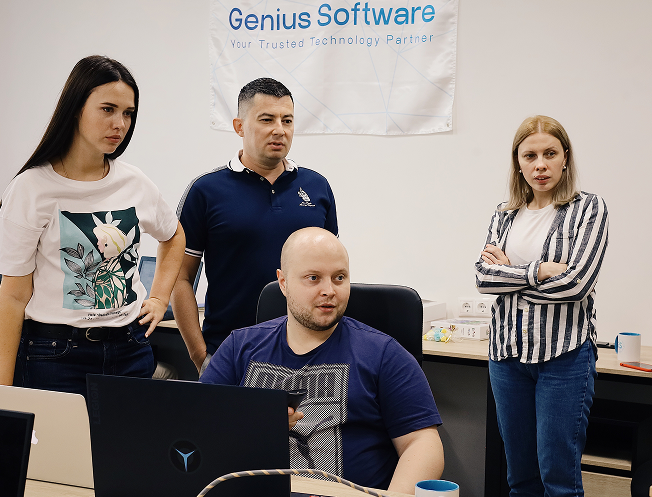
At Genius Software, we build AI agents that do more than generate answers. Our team covers the full AI agent development cycle, from idea and architecture to development, integration, testing, and ongoing support. We create autonomous AI agents, conversational agents, multi-agent systems, AI copilots, and workflow automation solutions for different business needs.
Our expertise includes LLM integration, Retrieval-Augmented Generation (RAG), agent memory, tool and API integration, AI workflows, data processing, and secure agent orchestration. We work with modern AI technologies and cloud platforms to build solutions that can reason, use business data, interact with external systems, and complete tasks with less human input.
We also bring proven software engineering experience to every AI project. Our work has earned recognition from Clutch and other leading B2B review platforms, helping businesses choose us as a reliable technology partner for complex software and AI development projects.
Get Started with Genius Software Development
Our development process moves from strategy through production support, validating the agent with real users before expanding its scope.
Step 1
Contact Us
Reach out to us through our Contact Page to discuss your project requirements. Our team will get back to you promptly to schedule a consultation.
Step 2
Consultation
During the consultation, we’ll discuss your needs, goals, and any specific challenges you’re facing. We’ll provide you with an overview of how we can help.
Step 3
Proposal
Based on the consultation, we’ll create a detailed proposal outlining the project scope, timeline, and costs. You’ll have the opportunity to review and provide feedback.
Step 4
Agreement
Once you’re satisfied with the proposal, we’ll formalize the agreement and begin the project. Our team will work diligently to deliver a solution that meets your expectations.
Our Portfolio


Our Clients Say
Genius Software developed a healthcare platform for a smart solutions and innovative products firm. The team created a secure platform for booking and managing appointments with patient and doctor dashboards. Genius Software’s work resulted in a 60% reduction in average booking time, a 4.9/5 user satisfaction score, and expansion to two new markets. The team was proactive, detail-oriented, and made effective UX decisions. They worked in sprints, kept the client updated, and solved problems quickly.

Iryna Stakhiv
Review from


Spain
5.0
Thanks to Genius Software’s work, the client achieved a 50% reduction in loan processing time, and the platform processed over 70% of loan requests. The team was transparent, responsive, and quick to adjust to changes. Genius Software’s expertise and ability to solve business problems stood out.

Michael Carter
Review from

Estonia
5.0
Working with Genius Software has been a great experience for our team at Artemis. ʼThey really stand out because of their professional approach and deep technical knowledge.
Communication was always clear and timely, which made the whole development process feel straightforward and predictable. They delivered exactly what we needed, earning a well-deserved 5.0 rating. I’d definitely recommend them to anyone looking for a reliable, expert development partner.

Attila P.
Review from


Hungary
5.0
I’ve seen many partnerships, but Genius stood out. They fit right into our workflows, were responsive, and offered smart suggestions. Their balance of technical expertise with usability and compliance impressed us. The platform is now fast, secure, and delivering real value – this felt like a partnership, not outsourcing.

Alina
Review from

Estonia
5.0
We very enjoyed working with Genius team on our web-app project and they helped our team to deliver this project within the deadline. All new features were delivered as planned using clear communication, they also helped with the solution architecture improvements so we highly recommend this team and will be happy to work again, thanks guys!

Elliot Baker
Review from

United States
5.0
Genius Software delivered a stable, fast, and secure platform on time, with zero major bugs at launch and 99.9% uptime. The team led a smooth and transparent process, conducting sprints and demos and responding quickly to all requests. They were also proactive and handled all changes well.

Tetiana Bykova
Review from

Cyprus
5.0
Genius Software developed the backend and mobile features of a fitness app. The team built the app’s architecture, including the workout and nutrition program modules and progress tracking system. Genius Software delivered a stable and personalized app, resulting in positive user feedback and exceeding adoption projections. The team executed a clear and straightforward process, ensuring a smooth launch.

Andrii Kovalenko
Review from

England
5.0
Excellent work! Your attention to detail, thorough testing, and clear documentation were top-notch. I appreciate your proactive communication, timely delivery, and professionalism throughout the project. Looking forward to working with you again in the future!

Chris Workum
Review from

Netherlands
5.0
Working with the Genius team was a game-changer for our complex Java project! They delivered every feature on time, kept communication crystal clear, and even elevated our solution architecture. Highly recommended — we’d gladly team up again!

Viktoria
Review from
United States
5.0
I’ve had a great experience working with Genius Software on our Identity Governance and Administration SaaS platform. Building enterprise-level security software is never easy, but their team handled the complexity with total professionalism.
The technical expertise they brought to the table was obvious from day one. They didn’t just follow instructions; they really dug into the architecture to ensure the platform was both scalable and secure.

Patrick P.
Review from
USA
5.0
Genius team is great, super proactive, very on top of the tasks and what is required, communicating with multiple people and navigating what was new to her fast. Proposing also improvements for the team and helping to drive some.
Ryan G.
Review from
USA
5.0
Genius Software developed and deployed an AI chatbot for a mobile solutions company. The team created a self-learning, multilingual system with a microservices-based architecture and live response accuracy. After launching the chatbot, the client experienced a 70% reduction in repetitive expert inquiries, over 90% response accuracy across five languages, and 100% user adoption within the first month.

Kate Zashalovska
Review from

Ukraine
5.0
Genius Software has delivered a high-quality product that has reduced manual transaction review time by four times, fraud detection, and financial losses from fraudulent operations. The team follows an Agile methodology, adapts well to shifting priorities, and integrates seamlessly with the client.

Olexandr
Review from
Estonia
5.0
Genius Software built a blockchain based platform for managing on chain operations and user interactions for our mutual client. The platform served as a single environment where users could connect wallets, interact with smart contracts, and track transaction activity in real time. They get things done fast and with minimal fuss. The product just works.

Anastasiia Cherednichenko
Review from
Ukraine
5.0
It was a pleasure working with the Genius Software team on our embedded platform development project. The team is incredibly organized and made the entire development process feel seamless. The technical execution was spot on, and their ability to manage the project’s moving parts ensured we stayed on schedule without any major hiccups. We were happy to provide a 5.0 rating for the quality of work delivered. I highly recommend the team for anyone needing a reliable, sharp project manager for technical builds.
Jordi B.
Review from

United Kingdom
5.0
Genius Software developed and designed a blockchain platform for an IT company. Genius Software delivered a reliable platform that was adopted shortly after release. The team provided clear structure, quick turnaround, and full visibility into all blockchain activity. Moreover, Genius Software communicated effectively through virtual meetings, emails, and messages.

Alexey Cherevuta
Review from
Ukraine
5.0
Genius Software developed a cloud-based hospitality platform for a software development company. They built the infrastructure, integrated multiple systems, and created user-facing apps. The platform was launched on time and successfully enabled the client to onboard over 1,000 properties while remaining stable under heavy booking traffic. The team consistently met deadlines and impressed the client with their open communication, reliability, and high-quality work.

Khrystyna Gorodnyk
Review from
Estonia
5.0
We enjoyed working with Genius team on our solution architecture technical audit and code review, he helped our team to identify technical design issues and improve it, also suggested cool engineering AI tools for our dev team, so we highly recommend him and will be happy to work again.

Oleksii Myrnyi
Review from
Estonia
5.0
Great help with our business analysis projects and some advice as well.

Caroline B.
Review from

Denmark
5.0
Genius Software delivered a production-ready platform with secure and scalable infrastructure. The client adopted the platform quickly, and property listings and ad management became much faster. The team had clear deadlines and solid deliveries.

Iryna Seleman
Review from
Estonia
5.0
Genius Software designed and developed an AI-based mobile app for a software development company. The app had an OCR system that extracted data, auto-filled forms, and integrated with compliance systems. Genius Software delivered an impressive product with an OCR accuracy above 95%, a 40% reduction in inspection time, and 90% fewer manual errors in compliance reports.

Viacheslav K.
Review from

Saudi Arabia
5.0
I really enjoyed working with the Genius Software team on our recent project. They are an exceptional team that is consistently positive, friendly, and efficient.
Beyond their technical skills, they genuinely promote a great working environment, which makes the whole process much smoother. I highly recommend them for any team looking for professionals who can keep things organized while maintaining high morale.

Erik Saar
Review from
Estonia
5.0
The Genius QA Automation team did a fantastic job on our project. They were incredibly helpful throughout the process, providing high-quality testing that gave us a lot of confidence in our product. It’s clear they know their way around automation, and they were quick to adapt to our specific testing needs. I’d be happy to keep working with them on future QA and testing tasks. They definitely earned their 5.0 rating. If you need a team that’s efficient and easy to collaborate with, I highly recommend them.
Emma Johansson
Review from
Estonia
5.0
Genius Software delivered a production-ready platform with secure and scalable infrastructure. The client adopted the platform quickly, and property listings and ad management became much faster. The team had clear deadlines and solid deliveries.

Vladislav Komovich
Review from
Ukraine
5.0
We chose Genius Software because they truly understood our business needs. We needed a reliable software partner with skilled engineers, efficient management, and zero downtime — and that’s exactly what they delivered. Their flexibility, transparency, and innovative approach continue to add great value to our collaboration.

Jeroen Megchelen
Review from
Netherlands
5.0
The system has produced a significant competitive advantage in the industry thanks to Genius Software well-thought opinions. They shouldered the burden of constantly updating a project management tool with a high level of detail and were committed to producing the best possible solution

Martin Goutry
Review from
United Kingdom
5.0
We were looking for a trusted technology partner with strong expertise, solid management, and fair pricing. Sergey and the Genius Software team impressed us with their technical knowledge, business understanding, and communication. They built a skilled engineering team, implemented a mature Scrum process, and delivered a high-load web, mobile, and API solution on time and within budget.

Matas Jakutes
Review from
USA
5.0
Sergey and his team helped us rebuild our web platform from a legacy system to a modern, high-load technology stack. They established a mature project management process, designed and developed scalable architecture, and delivered the solution within our budget and timeline. Their dedication and transparency ensured full visibility at every stage of the project.

Anders Filipsen
Review from
Denmark
5.0

Meet us in Estonia
Sergey Lvov
Chief Executive Officer
Address
Talinn, Kesklinna Linnaosa,
Kaupmehe tn 7/120, 10114

Meet us in Poland
Sergey Lvov
Chief Executive Officer
Address
Warsawa, Krakowskie
Przedmieschie 13, 00-071

Meet us in USA
Sergey Lvov
Chief Executive Officer
Address
USA, Tampa, FL 33602, 501 E
Kennedy Blvd #1400

Meet us in Ukraine
Veronika Marchenko
Business Development
Address
Ukraine, Kyiv,
Yaroslaviv Val 15, 01001
Contact Us
Have a question or idea? Our team is here to help
Frequently asked questions
What does an AI agent development company do?
An ai agent development company designs, builds, and integrates AI agents that plan actions, use tools, and execute multi-step tasks — covering strategy, engineering, integration, and guardrails, not just model access. The full services list is at geniussoftware.net/services.
What is the difference between an AI agent and a chatbot?
A chatbot answers questions. An AI agent plans a sequence of actions, calls tools or APIs, and executes tasks with limited human input — agentic ai development is about autonomous action, not just conversation.
How do I develop an AI agent for my business?
Start by defining a narrow, well-scoped use case, then build tool access and guardrails around it before expanding autonomy — developing ai agents works best as an incremental process, not a single large build.
What steps are involved in developing AI agents from scratch?
Define the use case, choose the framework and underlying model, build tool access, add guardrails, and deploy with monitoring — five steps that apply whether you’re developing one agent or a coordinated system.
How much does custom AI agent development cost?
Cost depends on the complexity of the workflow, how many systems the agent needs to integrate with, and whether it’s a single agent or a multi-agent system. A scoping call gets you an accurate estimate for your specific case.
What types of AI agents can be built (copilots vs. autonomous agents)?
Ai agent software development spans a spectrum — copilots that assist a human who makes the final call, autonomous agents that complete tasks independently, and multi-agent systems that coordinate several specialized agents.
How is an AI virtual assistant different from a fully autonomous agent?
AI virtual assistant development typically centers on a conversational interface for customers or staff, while a fully autonomous agent may operate without any direct user interaction at all — both share the same underlying planning-and-tool-use architecture.
Where do I start if I want to begin developing agent AI for my company?
Start with one process where the risk of an agent acting independently is low and the value is clear — a proof of concept there de-risks the bigger agentic ai for software development investment that follows.


