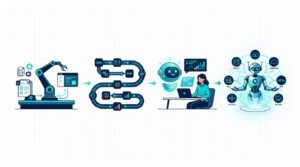


AI, or artificial intelligence, is changing the world around us. AI means making computers and machines smart, so they can do things like humans. AI jobs are already helping in many areas, like driving cars, talking to us on our phones, and even making art. This article will talk about how AI affects jobs, which jobs might be in trouble because of AI, and how we can get ready for new kinds of work with AI skills.
Which Jobs Are at Risk from AI Automation?

Manufacturing and Production AI Jobs
In factories, many jobs involve making products, like cars, toys, and clothes. Machines are getting smarter and can do many of these tasks. Robots can build things quickly and without breaks. This means that some jobs, like putting parts together or working on assembly lines, might be done by machines instead of people.
Example: Imagine a robot that can build a car by itself. It can work day and night without stopping. This might mean that fewer people are needed to build cars.
Transportation and Logistics
AI is also changing how we move things and people. Self-driving cars and trucks are becoming more common. These vehicles can drive without a human, using sensors and cameras to navigate.
Example: Think about a delivery truck that drives itself to your house to drop off a package. If trucks and cars can drive themselves, we might need fewer truck drivers and delivery people.
Retail and Customer Service with AI Jobs
When you go to a store, you might see self-checkout machines. These machines let you pay for your items without a cashier. AI can also help with customer service online, using chatbots to answer questions.
Example: If you have a question about your order, you might talk to a chatbot instead of a person. The chatbot can quickly find the answer for you.
Administrative and Clerical Work
Many office jobs involve tasks like entering data, scheduling meetings, and managing documents. AI can do these tasks faster and more accurately.
Example: Imagine a computer program that can organize all the files in an office and schedule meetings without making mistakes. This might mean fewer jobs for office assistants and clerks.
Finance and Accounting
AI can also help with money matters. It can analyze financial data, keep track of spending, and even help with taxes.
Example: If a computer program can check financial records and find mistakes, it might reduce the need for accountants and auditors.
Preparing for Future Job Markets with AI Skills
The Importance of Adaptability and Lifelong Learning
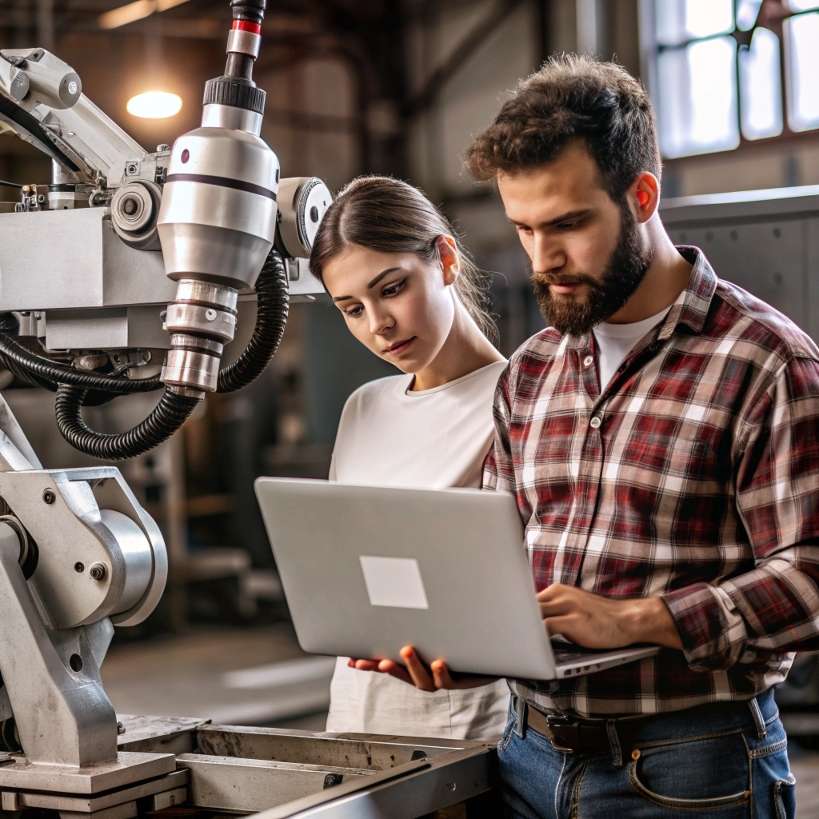
As AI changes the job market, it’s important to be flexible and ready to learn new skills throughout your life. This means being open to change and always looking for ways to improve.
Example: If your job is taken over by a machine, you can learn new skills to find a different job. This might mean taking classes or learning online.
Developing AI and Technical Skills
Learning about AI and technology can help you stay ahead. Understanding how to work with AI, programming, and data analysis can open up new job opportunities.
Example: Learning to code or understanding how AI works can help you get jobs in tech companies or create your own tech solutions.
Emphasizing Human-Centric Skills
While machines are good at many tasks, there are some things they can’t do as well as humans. Skills like critical thinking, creativity, and problem-solving are important. So are skills like communication and teamwork.
Example: If you can solve complex problems or come up with creative ideas, you will be valuable in the job market. Machines can’t easily replace these human skills.
Industry-Specific Training and Upskilling
Different industries will need different skills. It’s important to get training that is specific to your field.
Example: If you work in healthcare, learning about AI tools that help with patient care can be valuable. If you’re in finance, understanding AI in financial analysis can help you stay relevant.
Government and Corporate Roles in Workforce Transition
Governments and companies have a role in helping people transition to new jobs. This means creating programs that help people learn new skills and find new work.
Example: Governments can offer free or low-cost training programs. Companies can provide on-the-job training to help employees learn new skills.
How to Get Ready for the AI Job Market

Start Learning About AI Today
You don’t need to be a tech expert to start learning about AI. There are many online courses, videos, and books that make learning about AI easy and fun.
Example: Websites like Coursera, edX, and Khan Academy offer free courses on AI and technology.
Take Advantage of Online Learning and Training
Online learning platforms can help you gain new skills without leaving your home. Look for courses that teach coding, data analysis, and other tech skills.
Example: Sites like Udacity and Udemy offer courses in AI, machine learning, and more. You can learn at your own pace and on your own schedule.
Join Communities and Networking Groups
Connecting with others who are interested in AI can help you learn and find new job opportunities. Look for online forums, meetups, and social media groups related to AI and technology.
Example: Joining groups on LinkedIn or attending local tech meetups can help you meet people who can share advice and job leads.
Conclusion
AI is changing the job market in many ways. Some AI jobs might be done by machines in the future, but new jobs will also be created. It’s important to be ready for these changes by learning new skills and staying flexible. By working together, individuals, companies, and governments can make the transition smoother and help everyone find their place in the AI-driven world.