



In 2026, self-custody is no longer a niche preference — it’s a market expectation. Institutional players, retail users, and tokenized asset platforms are all demanding wallets that give them ownership without sacrificing usability. The global blockchain wallet market is tracking toward $48B by 2028, and Chainalysis data consistently shows that stolen funds and exploit losses — over $3.8B in 2023 alone — stem disproportionately from poorly architected wallet infrastructure, not from blockchain protocol failures themselves.
That gap between what the market needs and what bad development partners deliver is where enterprises get burned. Choosing the wrong crypto wallet app development company doesn’t just mean delayed releases or buggy UX — it means private key exposure, regulatory blowback, and the near-impossible task of rebuilding user trust after a breach. The cost of a single exploitable flaw in a production wallet can dwarf the entire development budget, and in Web3, there are no chargebacks.
This guide is written for CTOs, Web3 founders, and institutional product managers who already understand the crypto landscape and need a structured framework for evaluating development partners — not a primer on what a blockchain is. If you’re earlier in that journey, our overview of fintech and financial software development services covers the broader context.
What Does a Crypto Wallet App Development Company Do?
A serious crypto wallet app development company doesn’t just write Solidity and ship an APK. Their engagement lifecycle looks more like a security consultancy than a typical software studio, and the distinction matters enormously.
Discovery and Threat Modeling
Before a single line of code is written, the best partners run a threat modeling exercise against your specific product architecture. This means identifying attack surfaces across key storage, transaction signing flows, API integrations, and user authentication pathways. Chain selection happens here too — not every L1 or L2 is appropriate for every use case, and a partner worth hiring will challenge your assumptions about which networks to support on launch day. Our breakdown of top fintech app development trends for 2026 covers which chains are seeing the most institutional traction right now.
Wallet UX Design
Wallet onboarding is where most products fail their users. Seed phrase security education, recovery flow design, and biometric enrollment all need to be baked into the UX from day one, not bolted on post-launch. The best crypto wallet app development work produces interfaces that make secure behavior the path of least resistance — because users who feel confused will find workarounds, and those workarounds become vulnerabilities. See how this plays out in practice in our decentralized finance wallet development deep-dive.
Native Mobile Development
React Native and Flutter dominate the 2026 mobile wallet landscape, but the choice isn’t cosmetic. Secure enclave access, biometric APIs, and background key management behave differently across frameworks, operating systems, and device generations. A partner with genuine mobile app development depth will know which capabilities are available natively on iOS Secure Enclave vs. Android StrongBox, and will build around those constraints rather than paper over them.
Blockchain Node and API Integration
Production wallet infrastructure requires reliable connections to blockchain APIs — Alchemy, Infura, QuickNode, and self-hosted nodes all have different latency profiles, rate limits, and failover behaviors. The integration layer is also where gas fees UX decisions get made: does your wallet abstract gas entirely? Let users pay in stablecoins? Show real-time fee estimates? These choices have massive UX implications that ripple back through the backend architecture.
Smart Contract Integration and Post-Launch SLAs
If your wallet interfaces with DeFi protocols, NFT contracts, or token vesting schedules, smart contract integration needs dedicated testing environments, contract upgrade paths, and circuit-breaker logic. Post-launch SLAs — covering incident response times, hot-patch protocols, and audit re-engagement procedures — separate mature development partners from shops that disappear after final payment. Our IT services and solutions page details the managed service frameworks we apply to exactly these scenarios.
Types of Crypto Wallet Products
Not every wallet architecture serves every use case. Understanding the trade-offs is essential before you scope a project.
| Wallet Type | Custody Model | Primary Risk | Best For |
|---|---|---|---|
| Custodial | Company holds keys | Centralization, counterparty risk | Exchanges, new-to-crypto users |
| Non-custodial | User holds keys | Seed phrase loss, device theft | Self-custody advocates, DeFi users |
| Exchange-linked | Hybrid, hot wallet | Exchange insolvency | Active traders |
| DeFi/NFT-native | Non-custodial + contract | Smart contract exploits | Protocol power users |
| Multi-chain | Non-custodial | Key mgmt complexity | Cross-chain asset holders |
| Enterprise treasury | MPC / multi-sig | Governance failures | Institutional asset management |
Custodial vs. Non-Custodial
Custodial wallets simplify the user experience but transfer trust entirely to the operator. MiCA regulations in Europe and evolving FinCEN guidance in the US are tightening what custodians can and cannot do, which makes compliance architecture a first-class concern for any custodial product launching in 2026.
Non-custodial wallets eliminate counterparty risk but put seed phrase security responsibility squarely on the user. The UX challenge is designing recovery flows that are genuinely recoverable without creating centralized backup vectors that undermine the self-custody value proposition. Our work on building a neobank app illustrates how these custody trade-offs play out in regulated financial products.
Enterprise Treasury Wallets
This category has seen the most institutional growth, driven largely by tokenized RWA (Real-World Asset) infrastructure and corporate treasury diversification. Deloitte’s Digital Assets research noted that 65% of institutional crypto programs ranked MPC key management as their top infrastructure requirement. Enterprise treasury wallets built without MPC or hardware security modules (HSMs) should be considered architecturally unacceptable in 2026. Our fintech software expertise page outlines how we approach institutional-grade key management architecture.
Security Requirements You Should Prioritize

This is where most vendor conversations go wrong. Security gets discussed in marketing language — “bank-grade,” “military-grade” — when what you actually need is a technical audit of specific protocols and implementation decisions. Our post on why financial institutions invest in AI integration services discusses how security-first architecture extends across the full financial software stack.
Private Key Management
Private key management is the foundational layer, and hardware-level isolation is non-negotiable for any serious wallet product.
- iOS Secure Enclave: Keys generated inside the enclave never leave it in plaintext. Signing operations happen inside the hardware boundary. This is the correct architecture for mobile key storage.
- Android StrongBox: Available on newer Pixel and Samsung flagship devices, StrongBox provides Secure Element-backed key storage equivalent to iOS Secure Enclave. Not all Android devices support it — your partner should know how to gracefully degrade to TEE (Trusted Execution Environment) on older hardware without compromising key security claims.
- HSM Enclaves for Backend Infrastructure: Any server-side key operations — in custodial models or MPC coordinator roles — should run inside FIPS 140-2 Level 3 certified HSMs. AWS CloudHSM, Azure Dedicated HSM, and bare-metal Thales HSMs are the standard options.
- Cold Storage Architecture: For enterprise products, air-gapped signing devices with QR-based transaction broadcasting represent the gold standard. Partners who dismiss cold storage as “too complex for users” are optimizing for the wrong thing.
MPC or Multi-signature Models
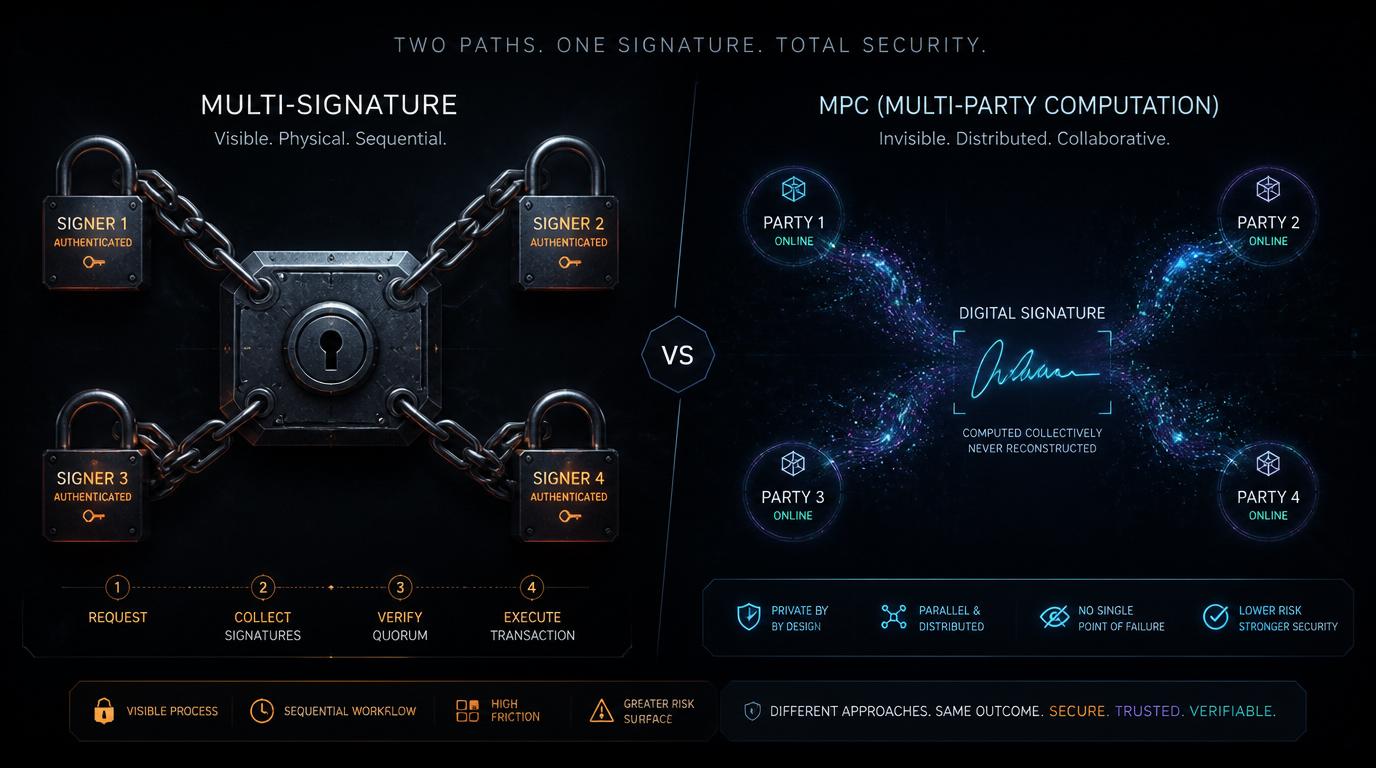
| Dimension | Multi-sig | MPC-CMP |
|---|---|---|
| On-chain footprint | Visible in tx data | No on-chain trace |
| Gas costs | Higher (multiple sigs) | Standard single-sig cost |
| Key reconstruction | Required at signing | Never reconstructed |
| Compatibility | Native to most L1s | Requires protocol support |
| Governance flexibility | Rigid m-of-n schemes | Dynamic threshold updates |
MPC-CMP (Multi-Party Computation with Compressed Multi-Party) protocols have become the dominant choice for institutional wallets in 2026. Unlike traditional multi-sig, MPC never reconstructs the private key — shards compute a signature collaboratively without any single party ever holding the complete key. This eliminates the reconstruction attack surface entirely. For a broader view of how blockchain architecture decisions affect financial products, see our open banking API integration guide.
Traditional multi-sig remains valid for on-chain governance structures where transaction transparency is a feature, not a liability. Our blockchain development expertise covers both models in production environments.
Secure Authentication
- Biometric authentication (Face ID, fingerprint) should gate transaction signing, not just app access
- TOTP-based 2FA for recovery flows and settings changes
- Anti-phishing vectors: domain-bound session tokens, visual confirmation of signing context, and transaction simulation previews before signing
- Passkey/WebAuthn integration is now table-stakes for web-based wallet interfaces
Encryption at Rest and In Transit
- AES-256-GCM for encrypted local storage of wallet metadata, cached balances, and address books
- TLS 1.3 minimum for all API communications — no fallback to TLS 1.2 in production configurations (IETF RFC 8446)
- Zero-knowledge proofs for privacy-preserving features: balance attestations without on-chain disclosure, anonymous credential verification for KYC workflows, and private NFT ownership proofs
- Database-level encryption for any backend that stores user-associated metadata
Our cybersecurity consultant services team routinely audits exactly these encryption layers before production deployment.
Penetration Testing and Web3 Security Audits
Web3 security audits are a different discipline from traditional penetration testing. Ask prospective partners specifically about:
- Smart contract audit history: Which firms? Trail of Bits, OpenZeppelin, Halborn, Certik — each has different specializations
- Audit scope: Does it cover the full integration layer, or just isolated contracts?
- Remediation workflows: How do audit findings get triaged, fixed, and verified?
- Continuous monitoring: Post-launch audit schedules and bug bounty program design
Our QA testing services incorporate Web3-specific security testing methodologies that complement third-party audit processes. A crypto wallet app development company that hasn’t shipped a product through a reputable third-party security audit is not ready for institutional work.
Smart Contract Risk Controls
- Upgradeable proxy patterns with time-locks on admin functions
- Emergency pause mechanisms with multi-party authorization requirements
- Input validation at the contract level, not just the client layer
- Formal verification for critical financial logic (token accounting, withdrawal caps)
Fraud Monitoring
- ML-driven transaction screening against OFAC sanctions lists and Chainalysis oracle feeds
- Real-time AML transaction monitoring with configurable risk thresholds aligned to FATF Recommendation 16 (Travel Rule)
- KYC workflows that integrate with identity providers (Jumio, Onfido, Persona) without storing sensitive identity data in the wallet backend
- Behavioral analytics for anomaly detection: unusual signing patterns, geographic velocity checks, and device fingerprint changes
For a full picture of how AI augments fraud monitoring in financial applications, our article on why use AI in financial software development is worth reading alongside this section.
Product Features Users Expect in 2026
The baseline feature set has matured considerably. What differentiated a wallet product in 2022 is now table stakes. Our top fintech trends piece traces how rapidly user expectations have shifted.
Core Features (Non-Negotiable)
- Multi-chain address aggregation with a unified portfolio view
- In-app atomic swaps (DEX aggregator integration: 1inch, ParaSwap, or proprietary routing)
- Gas abstraction — paying gas fees in stablecoins via ERC-4337 Account Abstraction is now a user expectation on EVM chains
- Real-time push notifications for incoming transactions, price alerts, and protocol activity
- NFT display with metadata resolution and rarity data
- Hardware wallet connectivity (Ledger, Trezor) via WalletConnect or native SDK
Advanced 2026 UX Requirements
| Feature | Technical Requirement | User Expectation |
|---|---|---|
| Gas abstraction | ERC-4337 bundlers, Paymaster contracts | Pay fees in USDC/USDT |
| Seamless onboarding | Passkey + biometric enrollment | No seed phrase on first launch |
| Fiat on-ramp | MoonPay, Transak, or Stripe Crypto API | Buy crypto in <2 minutes |
| Cross-chain bridging | LayerZero, Stargate, or Axelar integration | One-click bridge with fee preview |
| Wallet recovery | MPC-based social recovery or encrypted cloud backup | “Forgot seed phrase” doesn’t mean lost funds |
Account Abstraction deserves special attention: ERC-4337 enables session keys, sponsored transactions, and batch operations that fundamentally change the wallet UX contract. If your development partner isn’t fluent in Paymaster design and bundler infrastructure, you’re building for 2023. Our agentic AI in 2025 article explores how AI-driven automation is beginning to intersect with Account Abstraction for autonomous wallet operations.
How to Evaluate a Crypto Wallet Development Partner

Proven Web3 Experience
Ask for GitHub repositories of shipped mainnet products, not just testnet demos. Verify commit history, audit reports, and — critically — what happened after launch. Did the product survive a market stress event? Was there a security incident, and how was it handled? A blockchain wallet development company’s incident response track record is more revealing than their case studies. Our own cryptocurrency trading platform case study and investment trading platform case study document real production environments with verifiable outcomes.
Security-First Engineering
Look for partners with a documented Secure Development Lifecycle (SDLC) that includes:
- Threat modeling as a billable phase, not a checkbox
- Mandatory code review for all cryptographic operations
- External audit engagement before mainnet deployment
- Dependency scanning and supply chain security practices
Our software product development services page details how security gates are embedded in our delivery process from sprint one.
Mobile Product Expertise and UI/UX Simplicity
Wallet UX is genuinely hard. The partner needs designers who understand cognitive load in high-stakes financial contexts — someone confirming a $50,000 transaction needs different affordances than someone sending $20. Ask to see their design process for error states, recovery flows, and transaction confirmation screens specifically. Our UI/UX design services team specializes in exactly these high-stakes interaction patterns, and our UX/UI for users article explains the principles behind them.
Compliance Awareness
MiCA in Europe, FinCEN guidance in the US, and emerging frameworks across APAC markets all affect wallet product design. A partner operating without legal and compliance input is a liability. They don’t need to be lawyers, but they should have established relationships with crypto-specialist legal counsel and understand where KYC workflows, travel rule compliance, and transaction reporting obligations apply. Our managed IT services for banking article explores how regulatory infrastructure maps onto financial product architecture.
Transparent Delivery Process and Post-launch SLA Capabilities
- Defined sprint cadence with client-accessible staging environments
- Clear escalation paths for security issues discovered post-launch
- SLA commitments for critical bug response (hours, not days)
- Long-term audit re-engagement schedules built into the contract
Our dedicated team model and team augmentation services are structured around exactly these accountability requirements.
Questions to Ask Before Hiring
Use these directly in vendor evaluation conversations. Vague answers are disqualifying.
Technical Depth
- Walk me through how you handle private key sharding in an MPC architecture — what happens when one shard is compromised?
- How do you approach chain scalability when L2 transaction volumes spike and bundler queues back up?
- What’s your process for handing over smart contract audit reports to our internal team and the external auditor simultaneously?
- How do you implement transaction simulation before signing — which API do you use, and how do you handle simulation failures?
- Describe your approach to gas abstraction on non-EVM chains.
Product and Process
- What fiat on-ramp providers have you integrated in the last 12 months, and what were the KYC workflow edge cases?
- How do you handle wallet recovery for users who lose both their device and their backup?
- What does your post-launch security monitoring stack look like — who’s watching the alerts at 2am?
- Can you share an external audit report from a recent project, with the remediation log?
- What’s your policy when a critical vulnerability is discovered in production?
Our frequently asked questions page covers common questions about our own delivery processes, team structures, and engagement models.
Tech Stack Example
| Layer | Option A | Option B | Notes |
|---|---|---|---|
| Mobile frontend | React Native | Flutter | RN has broader Secure Enclave library ecosystem; Flutter offers faster rendering |
| Backend API | Go (Gin/Fiber) | Node.js (Fastify) | Go preferred for cryptographic operation performance |
| Blockchain APIs | Alchemy | QuickNode | Infura as fallback; self-hosted nodes for enterprise |
| Smart contracts | Solidity + Hardhat | Solidity + Foundry | Foundry preferred for fuzz testing |
| Key management | AWS CloudHSM | Thales HSM | Depends on cloud vs. bare-metal preference |
| Security scanning | Slither + MythX | Echidna (fuzzer) | Use both for coverage |
| Auth | Passkeys + TOTP | Biometric + WebAuthn | Stack depends on target platform |
| Monitoring | Chainalysis Reactor | TRM Labs | Both support AML/KYC workflow integration |
React Native vs. Flutter — The Real Debate
React Native wins on Secure Enclave library maturity (react-native-keychain, react-native-biometrics) and its JavaScript bridge’s compatibility with existing Web3 tooling (ethers.js, wagmi). Flutter offers superior rendering performance and a more consistent cross-platform UI, but its cryptographic library ecosystem is less mature and Dart’s Web3 tooling lags behind JavaScript equivalents.
For a wallet prioritizing hardware security module integration on day one, React Native is the lower-risk choice in 2026. For a wallet prioritizing visual consistency across Android and iOS at high rendering fidelity, Flutter is defensible if the team has strong Dart expertise. Our full-stack development services team works across both stacks and can provide a comparative analysis for your specific product constraints. For a broader language comparison relevant to wallet backends, our Python, Java, and JavaScript breakdown is a useful reference.
Common Mistakes Founders Make
Selecting on Price
The cheapest blockchain wallet development company is almost always the most expensive one long-term. Smart contract vulnerabilities, rushed key management implementations, and missing audit phases all carry remediation costs that dwarf the initial savings. A single exploitable flaw in a production wallet — even one with modest TVL — represents an existential reputational event. Our software cost estimation guide helps founders build realistic budgets that account for security phases from the start.
Treating Security as a Phase
Security can’t be added to a wallet after the architecture is set. Private key management decisions, encryption choices, and authentication flows are foundational — changing them post-launch requires architectural rework that is often more expensive than rebuilding from scratch. Our post on how to reduce bugs in software products explains how security-first thinking maps to overall code quality.
Ignoring Recovery Flow Planning
Most crypto wallet app development projects underinvest in recovery flows. What happens when a user loses their phone? What happens when they forget their PIN and don’t have their seed phrase? These aren’t edge cases — they’re common events, and wallets without well-designed recovery paths generate support costs, user churn, and — worst case — permanent fund loss that generates regulatory scrutiny.
Overlooking Compliance Obligations
- Launching in the EU without MiCA-compliant disclosures and CASP (Crypto-Asset Service Provider) preparation
- Ignoring travel rule obligations for transactions above FATF thresholds
- Building KYC workflows without data minimization principles, creating regulatory liability as privacy regulations tighten
Skipping Staging Environment Validation
Mainnet is not a testing environment. Partners who can’t provide a fully instrumented staging environment with realistic chain state simulation are cutting corners that will manifest as production bugs in financial transactions. Our quality assurance services define the staging validation standards we apply to every financial product before mainnet exposure.
Roadmap to Launch a Secure Wallet Product
MVP Phase — Months 1–4
The goal is a single-chain, audited wallet with core security infrastructure in place. Scope creep at this phase is the primary project killer. Our guide on how to build an effective MVP applies directly here — the principles of disciplined scoping are especially critical when security is in scope.
MVP deliverables:
- Single-chain support (choose the chain your users actually live on)
- Secure Enclave key generation and storage
- Seed phrase backup with encrypted cloud option
- Biometric authentication for transaction signing
- Basic send/receive with transaction history
- External security audit before any mainnet exposure
- Incident response runbook finalized
Growth Phase — Months 5–9
With a stable security foundation, layer in the features that drive engagement and revenue. Our app monetization strategies article covers how wallet products can build sustainable revenue models at this stage.
Growth deliverables:
- DEX swap integration (1inch or equivalent aggregator)
- Staking interface for supported protocols
- Fiat on-ramp via MoonPay, Transak, or Stripe Crypto
- Gas abstraction via ERC-4337 (EVM chains)
- Basic portfolio analytics and P&L tracking
- Push notification infrastructure
- Second external audit covering new integration surface area
Scale Phase — Months 10+
Multi-chain expansion and institutional capability layers. Our building scalable SaaS architectures guide covers the infrastructure patterns — multi-tenancy, horizontal scaling, database sharding — that apply equally to scaled wallet backends.
Scale deliverables:
- Multi-chain address aggregation (EVM + Solana + Bitcoin minimum)
- MPC-CMP upgrade for enterprise/institutional user segments
- Hardware wallet pairing (Ledger/Trezor via WalletConnect)
- Cross-chain bridging via LayerZero or Axelar
- Institutional treasury features: multi-party approval workflows, transaction limits, audit logs
- Ongoing quarterly audit cadence
- Bug bounty program launch
Final Thoughts
In Web3, trust is the product. Users are not choosing between feature sets — they’re deciding which company they trust with assets that, in many cases, represent a significant portion of their net worth. There is no deposit insurance, no customer service escalation path, and no regulatory backstop for a wallet exploit.
Selecting a crypto wallet app development company is therefore not a procurement decision — it’s a security decision. The partner you choose inherits a share of your users’ trust, and their engineering practices, security culture, and post-launch commitment either reinforce or erode that trust over time. The rise of AI software development companies is changing what “best practice” looks like year over year — which makes partner selection even more consequential.
The firms worth working with are the ones who push back on your timeline when security phases get compressed, who insist on external audits before mainnet deployment, and who have incident response runbooks ready before you ask. They treat wallet security not as a feature to be shipped but as an ongoing operational discipline.
The ones to avoid are easy to spot: they lead with price, promise unrealistic timelines, treat security audits as optional line items, and can’t produce a shipped mainnet product with a verifiable audit trail.
For any institution building serious Web3 infrastructure in 2026, the evaluation framework in this guide is the starting point. But the final filter is simpler: would you trust this company with your own funds? If the answer requires hesitation, you have your answer.